Let's start with what vaginismus actually is
Vaginismus is not a choice, a sign you're not ready, or something you can willpower your way through. It's an involuntary reflex. Your pelvic floor muscles tighten in response to penetration or the anticipation of it. The tighter you try to relax, the worse it gets. It's your nervous system running a protection protocol that no longer serves you.
The pain is real. The shame people feel about it is also real, and it's completely unnecessary.
Why penetration-focused approaches often backfire
Here's the trap: most sex is designed around penetration. When penetration causes pain, the obvious solution seems to be "try harder at penetration." This is backwards.
Pushing through vaginismus by forcing penetration tightens the reflex further. You're asking your nervous system to relax while simultaneously triggering the exact thing it's protecting against. It's like trying to fall asleep while someone's chasing you.
The research is clear on this. Cognitive behavioral therapy, pelvic floor physical therapy, and somatic work all rely on one principle: nervous system recalibration happens through safety, not force.
Photo by FounderTips on Pexels
How clitoral vibrators fit into treatment
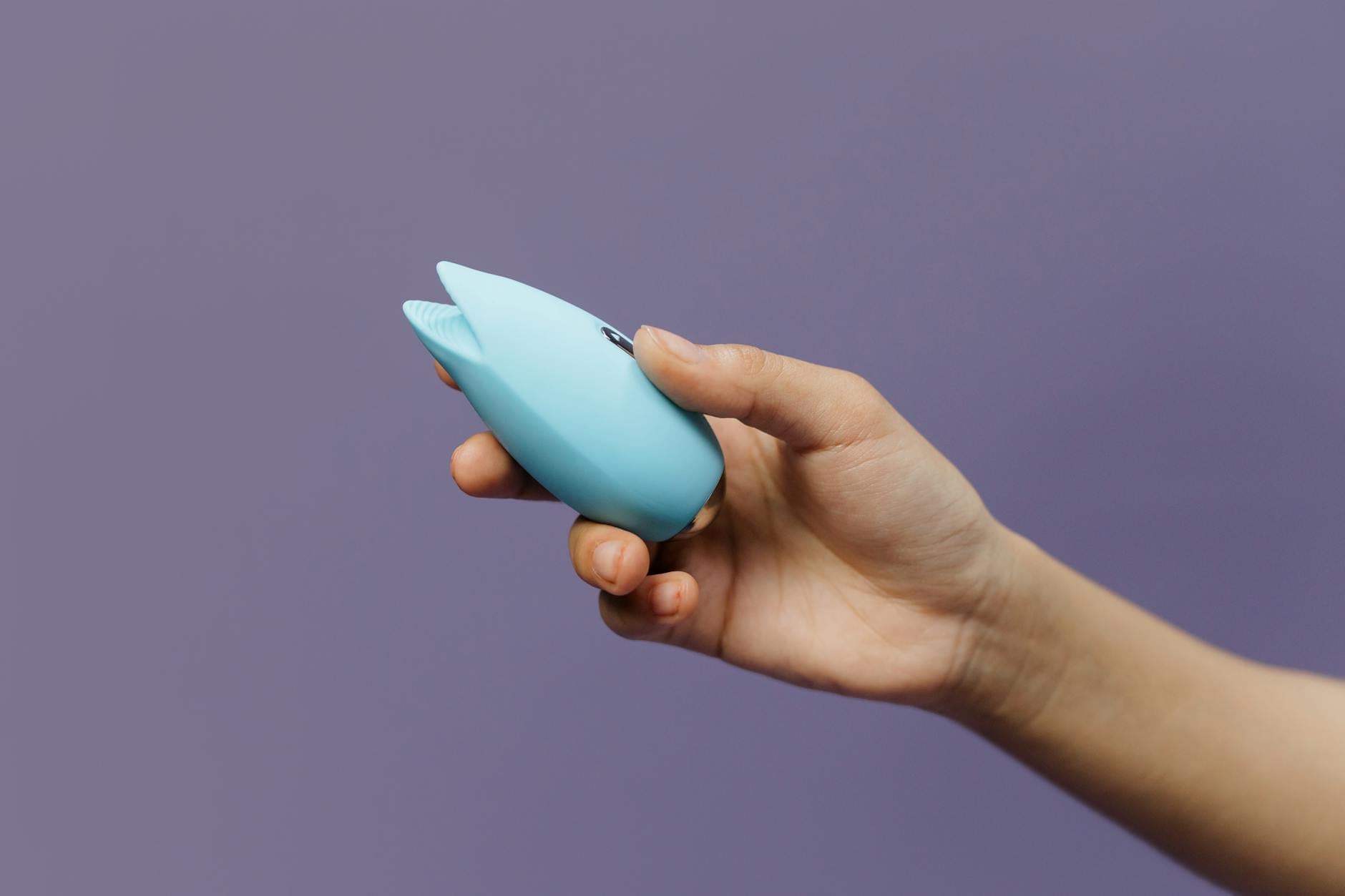
A lemon vibrator like the Lem is not a replacement for therapy. But it's a powerful tool that works alongside it. Here's why.
Clitoral vibration stimulates the pudendal nerve, which carries sensation from your whole genital area. When you experience pleasure through the clitoris, you're activating the parasympathetic nervous system. That's your rest-and-digest mode. Your pelvic floor relaxes naturally when you're parasympathetically engaged.
You're not forcing relaxation. You're creating the conditions for it to happen on its own.
Second, lemon clitoral vibrators give you control. You choose the intensity, the pattern, the speed, the moment to stop. This agency alone is huge for people with vaginismus, who often feel like their body is controlling them instead of the other way around.
Building tolerance through pleasure, not pain
One of the most effective somatic approaches to vaginismus is desensitization. But it works best when paired with positive sensation, not fear avoidance.
Here's a rough progression that many people find useful.
Stage one: Use a clitoral vibrator alone, in whatever way feels pleasurable. No goal, no performance, no timeline. This is purely about remembering that your genitals can feel good without pain attached. Do this until it feels normal, until your nervous system stops treating vibration like a threat. This might take weeks. That's fine.
Stage two: When you're comfortable, introduce very light touch or penetration while using your vibrator. The vibration becomes a grounding anchor. Your clitoris is sending "everything's okay" signals while you're gently exploring internally. Your nervous system gets two messages at once: pleasure here, gentle there.
Stage three: Gradually reduce reliance on the vibrator as your tolerance grows. Some people bring it back during partnered sex for a while. Others find they no longer need it. There's no end state you have to reach. If vibration stays part of your sex life, that's not failure. That's just what works for you.
Why the Lem works particularly well for vaginismus
The Lem uses pulsing suction rather than direct vibration. This matters.
Direct vibration against tender, sensitive tissue can feel too intense or even triggering for people with vaginismus. The suction pattern on the Lem creates a gentle, rhythmic pressure that stimulates broadly rather than pinpointing one spot. It's less acute, more enveloping.
It's also very easy to adjust intensity on the Lem without losing the sensation entirely. You can start at pattern one, stay there for weeks if you need to, and gradually explore the other patterns on your own timeline. There's no performance pressure baked into the tool itself.
Managing the mental side while using a vibrator
Vaginismus is not purely physical. The muscle reflex has a psychological shadow. Many people with vaginismus have internalized messages that their body is broken, that sex should hurt, that they're letting down their partner, that they're damaged.
Using a vibrator can bring all of that up.
That's actually useful information, not a sign you're doing it wrong. If shame or fear surfaces when you're using the Lem, pause and notice it. You don't have to push through. You also don't have to stop. Sometimes just sitting with the feeling, breathing, letting your body settle is the work.
A good therapist who specializes in vaginismus or somatic sex therapy can help you navigate this emotional layer while you're also doing the physical work. You're not weak or broken if you need that support. You're being smart.
What partners should know
If you're using a lemon clitoral vibrator while managing vaginismus, and you have a partner, they need to understand what's happening.
You're not choosing the vibrator over them. You're using a tool to help your nervous system feel safe. That's different. A partner who supports this is helping you build capacity for intimacy, not replacing themselves.
Many partners feel relieved when they understand this. They were probably feeling helpless. Suddenly they have something to do: support your pace, respect your boundaries, ask what you need. That's actionable.
The couples who move through vaginismus most successfully are the ones who stop treating it as "the person with vaginismus's problem" and start treating it as "our nervous systems need to recalibrate together." That shift in framing changes everything.
When to bring in a professional
You don't need a therapist to use a vibrator. You do need one if you've been dealing with vaginismus for more than a few months, if it's deeply affecting your self-image, or if you've already tried desensitization on your own and it hasn't budged.
A pelvic floor physical therapist trained in vaginismus can assess whether there's also a muscular tension pattern that needs direct intervention. A somatic sex therapist or sex therapist can help you untangle the nervous system piece. A therapist trained in Gottman Method or attachment-based work can help you and your partner rebuild safety in the relationship if vaginismus has created distance.
You might need all three. You might need one. The point is: vaginismus is treatable. Most cases improve significantly with the right approach.
The timeline is yours
Vaginismus didn't develop overnight. Recovery doesn't happen overnight either. Some people see improvement in weeks. Others take months or years. Both are normal.
The Lem and other lemon clitoral vibrators are tools for the middle part of that recovery. They help your nervous system learn that pleasure is possible, that your genitals are safe, that sensation doesn't have to mean pain.
That relearning is the real work. The vibrator just makes it easier to access.
Frequently asked questions
Can a vibrator make vaginismus worse?
A vibrator can't cause vaginismus, but starting with one that's too intense or using it in a way that triggers fear can feel like a setback. The key is going slow, using something with adjustable intensity like the Lem, and stopping immediately if you feel a tightening response. You're building tolerance through positive sensation, not pushing past pain.
How long before a vibrator helps with vaginismus pain?
Some people notice relief within a few sessions. Others need weeks of regular use before their nervous system begins to recalibrate. There's no standard timeline. If you've been using a vibrator for a few weeks and don't feel any shift, that's worth discussing with a therapist. It might mean your approach needs adjustment, or it might mean you'd benefit from additional support.
Should I use a vibrator alone or with a partner when managing vaginismus?
Both can work, depending on where you are in your recovery. Many people find it easier to start alone, in private, with no performance pressure. Once you've built some positive association with clitoral sensation, you can introduce a partner if that feels right. There's no rule here. Your comfort matters most.
What if penetration still feels painful even with a vibrator?
Vaginal pain during or after vibrator use usually means you're going too far too fast, or the vibrator is triggering the same protection reflex you're trying to ease. Scale back to purely clitoral use. If the pain persists even with external clitoral stimulation, that's worth checking in with a gynecologist or pelvic floor PT to rule out other causes like vulvodynia or endometriosis.
Can you have an orgasm with vaginismus using a vibrator?
Absolutely. Many people find that clitoral vibrators are actually the most reliable path to orgasm when vaginismus is present, because there's no penetration involved. Orgasm also helps reset your nervous system, further reducing vaginismus over time. It's not a side effect. It's part of the treatment.
Is vaginismus permanent?
No. With the right support, vaginismus resolves in most cases. Some people manage it completely through desensitization and nervous system work. Others maintain some awareness of it but build enough capacity that it no longer significantly impacts their sex life. Recovery looks different for everyone, but it does happen.
The path forward
Vaginismus makes people feel isolated and broken. You're not alone, and you're not broken. Your nervous system is just protecting you from something that once felt threatening. The path through it isn't about forcing your body to cooperate. It's about slowly, gently, with pleasure as the guide, teaching your system that safety is possible.
A lemon clitoral vibrator can be a useful part of that teaching. So can a good therapist, a supportive partner, and patience with yourself.
Your pleasure matters. Your pace matters. And you deserve support in reclaiming both. If you have questions about how Hello Nancy products might fit into your recovery, we're here to help. Get in touch.