
The pattern starts fast
Honestly, it's not a failure. It's neuroscience. Early attraction runs on novelty, anticipation, and discovery. Then, usually around three to four months, your nervous system starts to predict what comes next. Your partner touches you the same way, in the same sequence, at the same time of day. You know what's coming before it happens. Excitement flattens into comfort. Comfort flattens into routine.
Here's the thing: that transition isn't bad. But if novelty is what you actually need to stay connected, you have to interrupt the pattern deliberately. Most couples don't. They assume the flatness means incompatibility. It usually just means you're both on autopilot.

Photo by cottonbro studio on Pexels
Why lemon vibrators break the cycle
A clitoral vibrator is not a replacement for your partner. It's a circuit breaker. Here's what actually shifts when you introduce one:
First, sensation becomes unpredictable again. Your partner's hand is familiar. The pressure, the rhythm, the warmth. You anticipate it completely. A lemon vibrator produces sensation that neither of you has felt together. The texture is different. The intensity varies. You can't predict exactly when the stimulation will peak. That unpredictability wakes up your nervous system. Your body stops coasting.
Second, the focus shifts to discovery instead of performance. Without a vibrator, sex follows a familiar script. You know where it's going, how long it takes, what the finish line looks like. When you introduce a lemon clitoral vibrator, the entire experience becomes exploratory. What intensity works? What pattern feels best today? Should you use it together or take turns? The conversation changes. You're investigating something together instead of repeating something.
Third, it removes the pressure on your partner to be the only source of your pleasure. This is huge. In a new relationship, there's often a subconscious pressure on your partner to be enough. To get you there. To know exactly what works. That weight is real, even if it's unspoken. When you introduce lemon sexual toys, you signal that pleasure is collaborative, not dependent. Your partner gets to be part of discovery without carrying the entire load of your satisfaction.
The practical reset: how to introduce it
Timing matters. You don't need to have a three-hour conversation. You can literally say: "I've been curious about this. Want to try it together?" That's enough.
Start solo first if that feels safer. Use the vibrator on your own for a week or two. Learn what you like. Different intensity levels, different patterns. Most lemon vibrators have multiple settings, and you want to know your own body's response before bringing your partner into it. You're not gathering data for them. You're gathering confidence for yourself.
When you're ready to use it together, here's the sequence that usually works:
- Show your partner the vibrator without any pressure attached. Just "this is a thing, this is what it does." Answer questions. Make it normal.
- Start with your partner watching while you use it on yourself. Some people skip this step, but it's actually the highest-yield moment. Your partner gets to see you in genuine pleasure. They get to understand your body better. You get to feel desired without performing.
- Then experiment with your partner using it on you. Different angles, different pressure, different timing.
- Then you can use it together on your own body, with your partner doing something else. Penetration, kissing, their hands elsewhere.
The beauty is that each stage produces novelty. You're not repeating. You're discovering.
What changes in the bedroom (and why)
Three things happen consistently when couples introduce lemon clitoral vibrators in the predictable phase.
Energy returns. You're texting about it beforehand. You're thinking about it during the day. The anticipation comes back. Your nervous system isn't bored anymore.
Communication deepens. You have to talk about it. What feels good? What's too intense? Do you want to use it every time or occasionally? These conversations are small, but they're intimate. They build connection.
Pleasure becomes more reliable for everyone. Here's what I see in my practice: women often stop orgasming in the early relationship phase because the pressure to seem like the "right amount" of responsive kicks in. A lemon vibrator gives permission for genuine pleasure. You're not performing responsiveness. You're experiencing actual sensation. For partners, this is wildly attractive. Real pleasure is sexy. Performed pleasure is exhausting.
The Lem vibrator, for instance, uses suction rather than vibration, so it feels distinctly different from any hand-based stimulation. That difference is the whole point. You're not replicating. You're adding.
The conversation framework
If you're nervous about bringing this up, here's what actually works:
"I've been thinking about how we could mix things up. I found this vibrator that sounds cool. I'm not looking for anything to be wrong with us. I just want to explore more together. Would you be open to trying it?"
That's it. Notice what's in there:
- You're taking ownership ("I've been thinking")
- You're specific (not vague)
- You're framing it as addition, not correction
- You're asking, not assuming
Most partners say yes. The ones who are hesitant usually have insecurity about being "replaced." That's real and worth listening to. You might need to reassure them. You might need to try something else. But often, once they see how genuinely you're exploring this and how much you still desire them, the resistance softens.
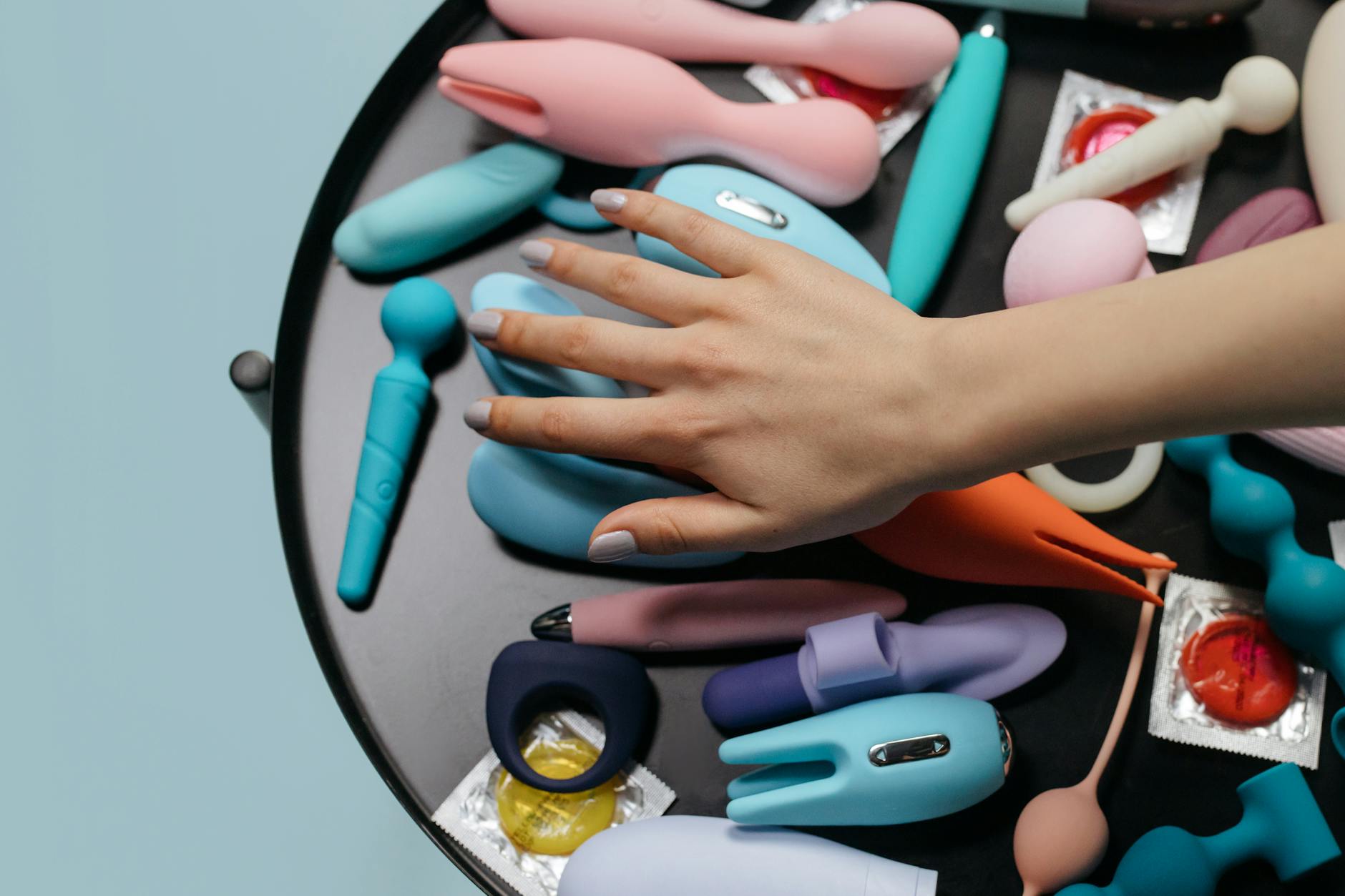
Photo by cottonbro studio on Pexels
Why novelty is actually about connection
Let me be clear about something: you're not introducing a vibrator because your partner isn't enough. You're introducing novelty because your nervous system needs it to stay engaged. That's not a flaw in him or in the relationship. That's biology.
In research on long-term couples, novelty and curiosity are among the strongest predictors of sustained sexual connection. Not frequency. Not how attracted you are at the beginning. Novelty. The willingness to keep exploring.
When you bring a lemon vibrator into the picture at the predictable stage, you're actually investing in longevity. You're saying, "I want to keep discovering this with you." That's different from saying, "Our routine isn't working."
When to know it's time
You don't have to wait for things to feel boring. You can introduce variety proactively. But signs that you're definitely in the predictable phase include:
- Sex happens on the same day of the week, at the same time of day
- You know the exact sequence and duration
- You're having sex less frequently, not because of stress, but because the spark has shifted
- You're thinking about your to-do list during sex instead of being present
- Your partner initiates the same way every time, and you find yourself anticipating it with neutrality instead of excitement
If three of these sound familiar, you're in the window. This is the moment when introducing something new lands differently than it would later. Early enough that it feels like discovery. Late enough that the relationship is solid.
FAQ
Can using a vibrator together actually bring you closer, or is it just novelty?
Both. Novelty alone is shallow. But novelty plus vulnerability equals actual intimacy. You're trying something new together. You're both slightly uncertain. You're communicating about what feels good. That's intimacy. The novelty is just the vehicle.
What if my partner thinks a vibrator means they're not satisfying me?
That's a real fear, and it deserves a real conversation. The truth is: a vibrator produces a different sensation than hands or a body can. It's not better. It's different. You can want both. You wanting variety doesn't mean what your partner does isn't enough. It means you want more exploration. Frame it that way.
Should I use a vibrator with my partner every time we have sex?
No. That would flatten it into the same routine you're already in. The power of introducing a new tool is that it's not constant. Try it once every two weeks or once a month at first. Keep it special. Keep it novel.
Which lemon vibrator works best for couples exploring together?
Look for something with multiple intensity levels so you can find a sweet spot. The Lem is designed for clitoral stimulation and works well in partnered scenarios because the suction sensation is distinct enough that it genuinely adds to the experience rather than just replacing your partner's touch. Start on a lower setting.
What if we try this and it doesn't work?
Then you've learned something. You've tried something. You're still ahead of couples who don't try anything. Some people find vibrators aren't for them. That's fine. The point was to interrupt the pattern and have a conversation. You've done both.
How do I know if we're compatible enough to make this work?
If you can talk about sex without shame, you're probably compatible enough to try. That's actually the bar. Not perfect communication, just willing communication. Can you say the word vibrator without it turning into a whole thing? Then you're ready.
The real shift
Predictability in sex doesn't mean your relationship is dying. It means your nervous system has adapted. You've become comfortable. Comfort is good. But comfort without novelty eventually becomes invisible.
When you introduce lemon vibrators, you're not trying to save the relationship. You're trying to stay curious about each other. You're saying that pleasure and exploration matter enough to keep evolving. That's actually what makes new relationships last.