Okay, let's name the actual fear
You're thinking about trying a lemon clitoral vibrator. But you're also thinking: what if it's too much? What if the sensation is overwhelming, jarring, or just plain weird? What if you're not "that kind of person" who can handle intensity?
Here's what I hear from people constantly: vibrators feel too strong, too fast, too alien. And then, once they actually try one with the right approach, they wonder why they waited so long. The gap between the fear and the reality is massive. Let me walk you through exactly how to close it.
Why the anxiety makes sense (even if the fear isn't)
Your clitoris has 8,000 nerve endings packed into a space smaller than a pea. Vibration is a completely different sensation from touch. Your brain doesn't have a reference point for it yet, which means uncertainty feels legitimate. That's not weakness or excessive caution. That's your nervous system doing exactly what it's supposed to do: flagging the unknown.
But here's the thing: unfamiliar doesn't mean dangerous. It means untested. And vibration, when introduced gradually, actually teaches your nervous system to expand its pleasure capacity rather than demand more from it.

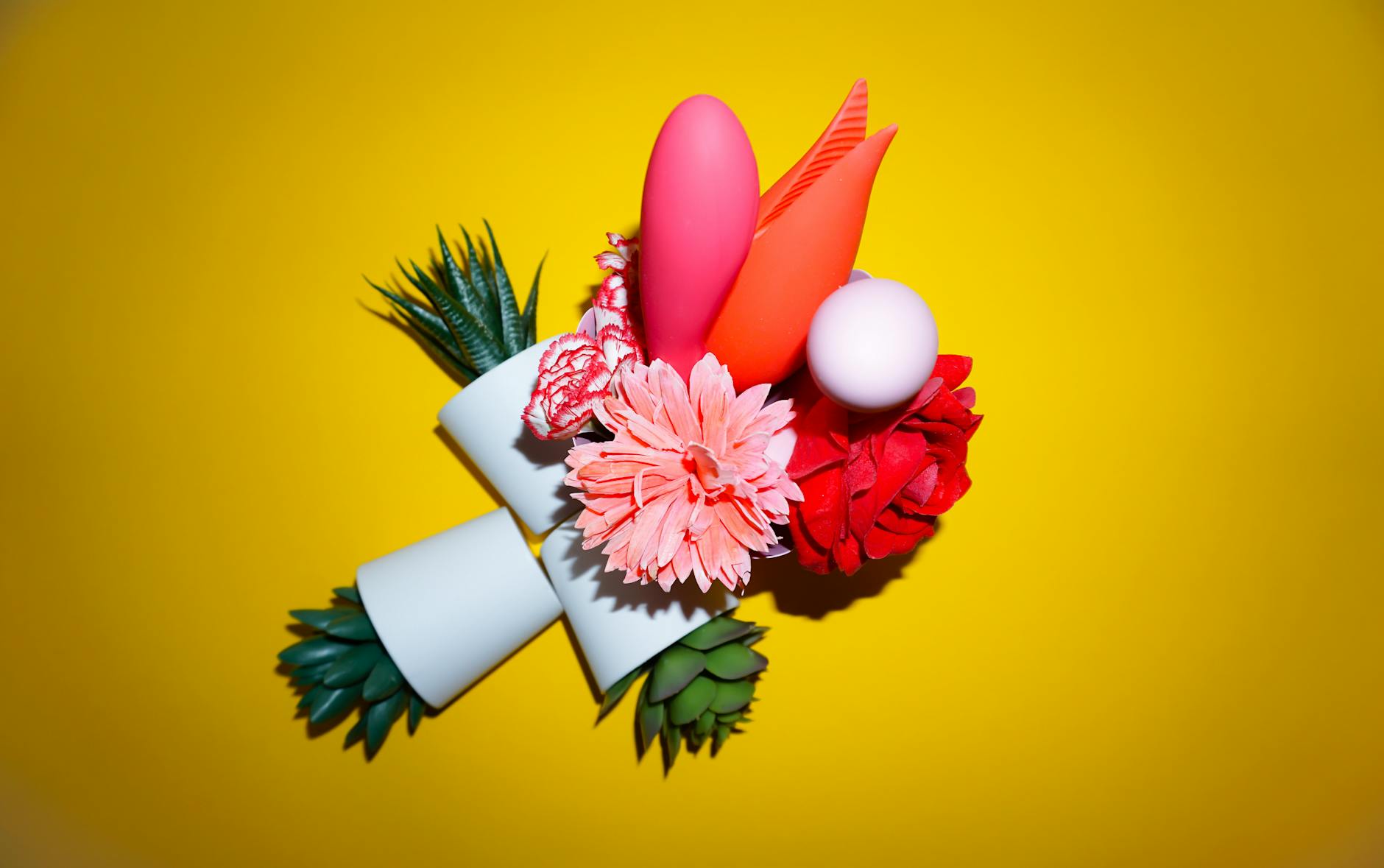
Photo by cottonbro studio on Pexels
The progression that actually works
Don't start at full intensity. That's the mistake almost everyone makes when they're nervous. Here's the sequence that rewires your nervous system instead of shocking it.
Stage 1: Powered off, clothed exploration (2-3 sessions). Hold the lemon vibrator against your thigh over your underwear. Feel the weight, the shape, the slight vibration from the motor (even off, you can feel the internal parts). This takes the mystery out of the object itself. Your body learns it's not dangerous, just different.
Stage 2: Powered on, lowest setting, clothed (2-3 sessions). Turn it to pattern 1 or the absolute lowest intensity. Keep it over your underwear at first. Feel how the sensation travels through the fabric. It'll feel gentler than you expected. Most people are shocked by how subtle it is on the lowest setting.
Stage 3: Direct contact, lowest setting, dry (1-2 sessions). Remove the barrier. No lubricant yet. Just skin to device on the lowest pattern. Spend time here. This is where your nervous system learns that direct contact isn't harsh. The sensation changes when there's no fabric buffer, but not dramatically.
Stage 4: Add lubrication, stay at lowest setting (2-3 sessions). Water-based lubricant changes everything. It softens the sensation and helps the device glide instead of vibrate against a single spot. Many people find this the most comfortable sweet spot and never feel the need to increase intensity. That's completely fine.
Stage 5: Experiment with patterns and intensity (ongoing). Once you're comfortable at the lowest level, try different patterns. Try slightly higher intensities for 10-15 seconds, then return to what feels good. You're in control. There's no deadline.
Why this progression matters more than the device itself
The lemon clitoral vibrator is designed with suction and pulsing patterns specifically to feel less harsh than traditional vibrators. But even with good design, nervous system activation matters. Your body needs time to categorize a new sensation as pleasurable instead of threatening.
This isn't psychological. It's neurobiology. The first time you experience something novel, your brain's threat-detection system activates before your pleasure system gets a chance. By introducing vibration gradually and in a safe context, you're essentially retraining that hierarchy. The pleasure system gets to work before the alarm bells ring.
What to do if it still feels too intense
Some people move through the progression and still find even the lowest setting overstimulating. That's not a character flaw. It's information. Here are your actual options.
Use it externally only. Never bring it directly to your clitoris. Keep it an inch or two away, or press it against the inner thigh and let the sensation radiate. Diffused vibration feels completely different from direct contact.
Add more barriers. Underwear over bare skin changes the intensity significantly. Some people use two layers. Experiment until it feels right, then gradually reduce layers as your comfort grows.
Try a different pattern. The lemon vibrator has multiple patterns beyond simple intensity increases. Some patterns feel gentler even at the same power level because the rhythm changes how your nervous system processes the sensation. Pattern 2 might feel softer than pattern 1 even though the underlying intensity is similar.
Accept that this tool might not be yours. And that's okay. Pleasure tools aren't one-size-fits-all. Some people find lemon clitoral vibrators transformative. Others prefer wand vibrators, air-suction devices, or no vibration at all. The goal is your pleasure, not proving you can handle a specific device.
The role of a partner in this process
If you're exploring with someone, communication matters more than anything. Tell them: "I'm going to go slowly. I might stop and restart. I might not like it yet, and that doesn't mean never." A partner who respects that boundary makes the whole process easier because there's no performance pressure.
Some people find that a partner introducing the device feels safer than solo exploration. Others find the opposite. Neither is wrong. What matters is that you're calling the pace and stopping whenever you want.
The sensation you might actually experience
Once you're through the progression, here's what people report. Vibration at the lowest setting typically feels like a warm, pulsing buzz. It's localized but not sharp. At medium settings, it feels more present, slightly stronger but still rhythmic. At high intensities, it can feel almost overwhelming in the best way. That last one takes time to get there. Most people don't want to rush to it.
Orgasms from vibration often feel different from orgasms from touch. They can be more intense, more localized, or faster to build. Some people find them deeper. Others find them more surface-level. There's no correct version.
Common myths about vibrator intensity that need to die
Myth: "If I use it now, I'll need it forever." False. Your body doesn't become dependent on vibration the way it does on some medications. You can use vibrators for years, take a break, and your sensitivity returns to baseline.
Myth: "Starting slow means I'm not really interested." False. Taking time to build comfort is a sign of self-awareness, not lack of desire. Pleasure is more sustainable when it's built on a foundation of genuine comfort.
Myth: "Good sex doesn't require tools." False. Tools are extensions of pleasure, not replacements for it. Using a lemon vibrator during partnered sex is addition, not substitution.
Myth: "If I'm nervous, I shouldn't do it." False. Nervousness about trying something new is different from a genuine safety concern. Moving through nervousness with a thoughtful progression is how people expand their capacity for pleasure.
FAQ: Your specific concerns, answered
What if the sensation is painful instead of pleasurable? Stop immediately. Pain and pleasure are not on a spectrum. They're different signals. If vibration causes sharp pain, you might have a medical reason to explore with a gynecologist (pelvic floor tension, vulvodynia, or other conditions). In the meantime, don't push through pain. That reinforces the wrong message to your nervous system.
Can I use numbing cream to make it less intense? Technically yes, but I'd advise against it. Numbing cream interferes with feedback from your nervous system, which means you can't actually learn to enjoy the sensation. You'd just be masking discomfort. The progression above is slower but more effective.
How long before I should expect to like it? Some people feel immediate comfort and pleasure. Others need 4-6 sessions before they stop being nervous. A few need 8-10. There's no standard timeline. Go at your own pace.
Does lubrication reduce the intensity? Yes, significantly. Water-based lubricant softens the sensation and distributes the vibration more evenly. If you're nervous, start with lube. It's your friend.
What if I'm using it with a partner and they're disappointed I'm going slow? Then you have a different conversation that needs to happen before you try anything else. A partner's disappointment in your pace is a red flag worth addressing. Your comfort is non-negotiable.
Is there a "right" age to start? No. People explore vibrators in their 20s, 40s, 60s, and beyond. How to Use Lemon Vibrators When Arousal Takes Longer to Build covers how sensation shifts over time, but there's no deadline or optimal window.
The permission you actually need
Here's what I want you to hear: you don't have to be "brave enough" or "adventurous enough" or "that kind of person" to explore vibration. You just have to be curious enough. Curiosity is the entire threshold. Everything else is just logistics.
Nervousness about intensity isn't a sign you shouldn't try it. It's a sign you should try it slowly, deliberately, and on your own timeline. That kind of intentionality actually deepens pleasure more than rushing through does.
Start with the progression above. Trust your body's signals. Adjust the approach if it's not working. And know that thousands of people who started exactly where you are now find that lemon clitoral vibrators unlock pleasure they didn't know was available. Your nervousness doesn't disqualify you from that experience. It just means you're going to get there thoughtfully.
The pleasure you're worried about being too intense? You get to decide what that threshold is. Take the time to find it.