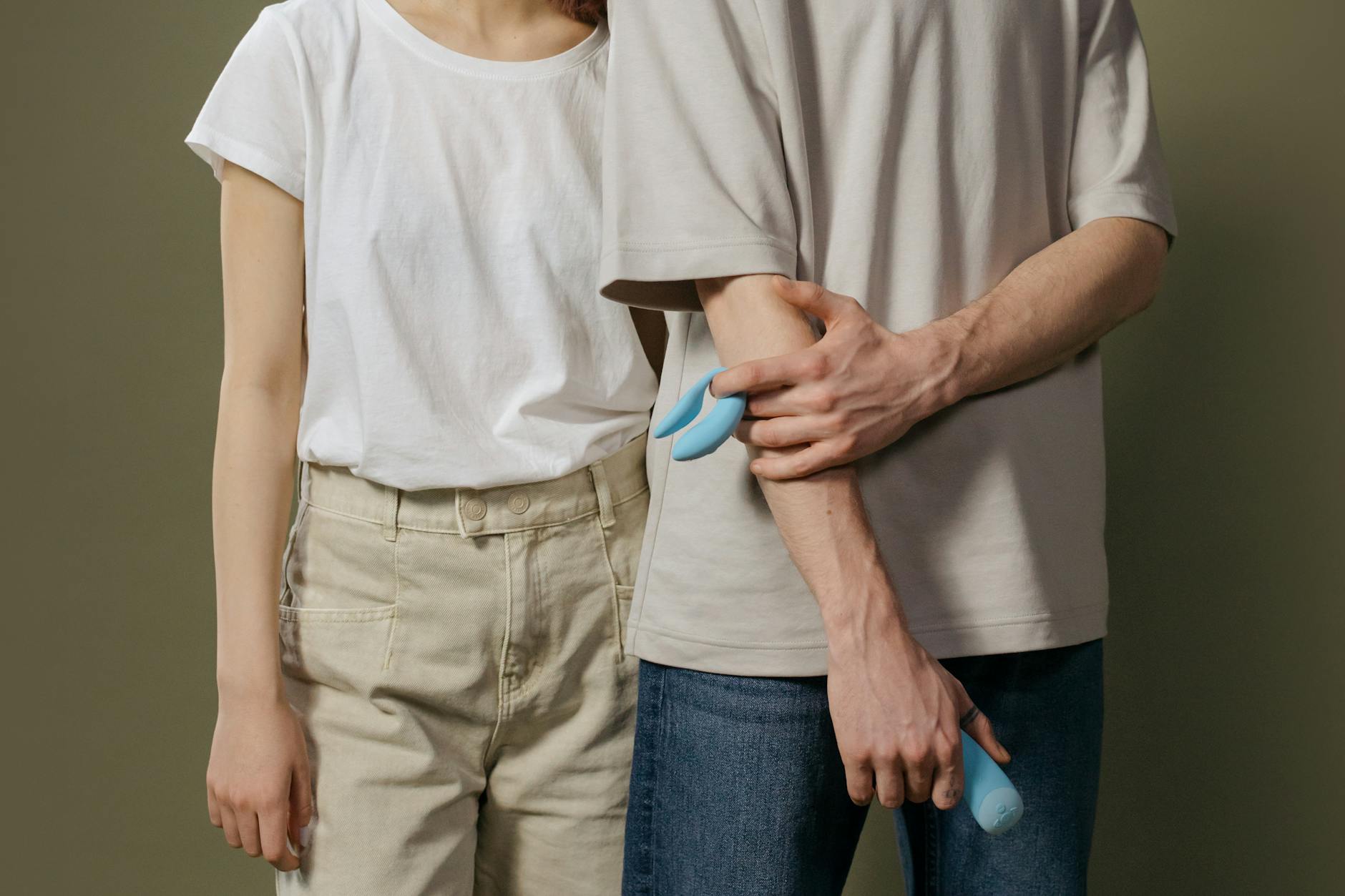
Let's clear the air first
Using a lemon vibrator alone while you're in a partnership doesn't mean your relationship is broken. It means you're taking responsibility for your own pleasure, which is one of the healthiest things a person in a long-term relationship can do.
I've worked with hundreds of couples, and the ones who thrive are the ones who understand this: your partner cannot be the sole source of your sexual satisfaction. The pressure is impossible, the expectation is unfair, and it sets everyone up to fail. Solo play with a clitoral vibrator, including a lemon vibrator, is not a threat. It's maintenance.
Why therapists actually recommend solo pleasure
Here's what the research shows. People in couples who have regular solo sex report higher relationship satisfaction, more frequent partnered sex, and less resentment. Not because they're having affairs or escaping. Because they understand their own bodies better, they know what they want, and they can ask for it clearly.
When you use a lem vibrator alone, you're mapping your own pleasure. You learn your sensitivity patterns, your preferred rhythm, what builds toward orgasm and what breaks it. Then, when you're with a partner, you're not expecting them to guess. You can say, "I need about 90 seconds of the higher patterns," or "I respond better to indirect pressure." That's not criticism. That's collaboration.
There's also a freedom factor. Alone, you can take 45 minutes or 10 minutes. You can stop and start. You can use your lemon vibrator with no performance pressure, no awareness of someone else's body or needs. That psychological space is where many people discover new sensations or orgasm types they never knew they had.
The conversation you need to have (and when)
If you're in a relationship and thinking about solo play with a lemon clitoral vibrator, don't sneak it. That's where problems start.
Pick a time outside the bedroom, outside sex. Saturday morning with coffee, not 9 p.m. when you're both tired. Say something like: "I want to explore my pleasure more on my own time. I'm thinking about getting a clitoral vibrator for solo use. I'm bringing this up because I value your trust, not because I'm hiding anything."
Then pause. Listen to what comes up. Sometimes it's insecurity. Sometimes it's fear that they're doing something wrong. Sometimes it's genuine curiosity.
The clearest response you can offer: "This is about me knowing myself better. It's not a commentary on us or what we do together." Then follow through. Use your lemon vibrator solo, openly, without shame. Keep the conversation light and factual. You're not confessing. You're informing.
 Photo by Frank Schrader on Pexels
How to actually start
If this is your first time with a lemon vibrator or any clitoral vibrator, the learning curve feels steep until it doesn't.
First, pick a time when you have genuine privacy and at least 20 minutes. Not rushed. Not squeezed between other tasks.
Second, start with lower patterns. A lot of people buy a lem vibrator or other lemon sucker and go straight to max intensity. That's like touching a hot stove to see if it's hot. Start at pattern 1 or 2. The sensation builds. Your body adjusts. Patience wins here.
Third, use lube. Water-based lube, applied to the external area, makes everything feel less clinical and more responsive. Your clitoris has thousands of nerve endings. Lubrication lets them work properly.
Fourth, explore without a goal. Don't decide you need to orgasm. Notice what feels good. Notice what patterns make your breath change. Notice what makes your thighs tense. Orgasm might happen. It might not. Both are data, not failure.
What changes when you integrate solo play into a partnership
Once you've established solo time with your lemon vibrator, a few things shift naturally.
You become less dependent on your partner for orgasm. That's freedom for both of you. You can focus on connection and sensation rather than outcome. Sex becomes less goal-oriented and more exploratory.
You also have more to contribute to partnered sex. Some couples find that solo exploration creates new ideas. "I realized I really like this particular pattern" or "I want to try this rhythm during sex." Those conversations are good. They're specific. They're not criticism.
If your partner feels anxious about your solo play, that often signals something else underneath. Maybe they feel disconnected. Maybe they're worried they're not enough. That's a legitimate feeling that deserves a conversation, but it's a different conversation than the one about your lemon vibrator. Don't conflate them. Say: "I love our sex. I also need this personal time. Those things coexist." Then stay consistent. Consistency is what builds trust.
The rhythm that works
I typically recommend solo play 1-2 times per week, depending on your body and life. Some people prefer more. Some prefer less. The point is regularity, not frequency. Your body learns what to expect. Your nervous system settles. You know when you have permission to pleasure yourself.
Timing matters less than consistency. Some people use their lem vibrator in the morning for energy. Some use it at night to wind down. Some use it mid-week as a break from stress. Pick whatever rhythm your life supports, then stick to it.
One note: if your partnered sex frequency drops significantly after you start solo play, check in. Not because it's wrong, but because it might signal that you're using solo play to avoid intimacy rather than to enhance it. Those are different patterns. One is healthy. One needs attention.
When solo play opens doors in your relationship
Here's the interesting part. Many couples find that introducing solo play actually strengthens their sexual connection.
Why? Because pleasure becomes less mysterious. You're not pretending you want things you don't. You're not resenting your partner for not reading your mind. You're also not suppressing your sexuality, which tends to leak out as irritation or distance.
When both partners have solo practices, the bedroom conversation shifts from "You should make me feel..." to "Here's what works for me. Here's what I want us to build together." That's a conversation between adults, not a performance review.
Some couples even find that knowing their partner uses a lemon vibrator is erotically interesting. It's not about comparison. It's about knowing their partner is taking care of their own pleasure. That's attractive in a deep way.
Questions you might have
Does solo play with a clitoral vibrator reduce desire for partnered sex? Not if it's replacing a healthy solo practice that doesn't exist otherwise. If you didn't have regular solo sex before, adding it might reduce frequency temporarily while your system recalibrates. That usually stabilizes within a few weeks.
Should you tell your partner the exact frequency of your solo use? No. Your partner needs to know it exists and that you're comfortable with it. They don't need a schedule. Privacy around frequency is reasonable boundary.
What if your partner asks to join your solo sessions? That's a conversation. Some people love that. Some want to keep solo time truly solo. Both are valid. You get to choose.
Should you hide your lemon vibrator? No. Store it somewhere private and secure if you have kids in the house, obviously. But adult partners hiding sexual tools from each other is a trust problem waiting to happen. Keep it accessible, keep it clean, keep it yours.
What if you're more into your lemon vibrator than partnered sex? That might signal something real. But it might also signal that partnered sex is boring, uncomfortable, or misaligned with what you actually want. Those are different problems with different solutions. Solo play with your clitoral vibrator is not the problem. It's the mirror.
Does learning to orgasm alone make it harder to orgasm with a partner? Not if you're using realistic expectations about partnered sex. Solo orgasm is different from partnered orgasm. You control everything when you're alone. With a partner, pleasure requires collaboration and communication. Both skills matter. Neither replaces the other.
The thing no one talks about
Using a lemon vibrator alone is also a radical act of self-knowledge. In a culture that tells women their bodies exist for someone else's pleasure, taking an hour to focus entirely on your own sensation is defiant.
Your partner might sense that. It might make them uncomfortable at first. But it also signals that you respect yourself, that you understand your needs, and that you're not willing to disappear into partnership. Those qualities tend to deepen relationships rather than threaten them.
Start the conversation. Get your lemon clitoral vibrator. Take your time. Notice what happens. Most couples find that solo play with a lem vibrator creates more honest, more playful, more connected partnered sex. The solo practice informs the partnership. The partnership supports the solo practice. Both thrive.
People also ask
Is it normal to want solo time with a vibrator when you're in a relationship?
Completely normal. Research on couples shows that individual sexual autonomy actually strengthens long-term partnerships. People who maintain solo sexual practices report higher satisfaction with their relationships and higher frequency of partnered sex. It's not a sign something's wrong. It's often a sign something's right.
How often should you use a lemon vibrator alone?
There's no universal number. Some people prefer weekly sessions. Others go for twice a month. The key is consistency rather than frequency. Your body and nervous system respond better to a regular rhythm than sporadic intensity. Pick what your life supports and stick to it. If you're using solo play to avoid partnered intimacy, that's worth examining. If you're using it to enhance self-knowledge, that's healthy.
Should you tell your partner you're using a clitoral vibrator solo?
Yes, eventually. You don't need to announce it immediately or defensively. Pick a neutral moment outside the bedroom and say something straightforward: "I want to explore my own pleasure more. I'm getting a vibrator for solo use." Then answer questions honestly. Honesty builds trust. Secrecy erodes it.
Can a lemon vibrator replace partnered sex?
No tool replaces connection. A lemon vibrator is a way to know yourself better and take responsibility for your own pleasure. Partnered sex is about collaboration, trust, and intimacy with someone else. They serve different needs. Both can exist in a healthy relationship. If you're choosing solo pleasure over partnership consistently, that's a signal that something in the partnership needs attention.
Does using a lem vibrator make it harder to orgasm with a partner?
Not if you're realistic about the differences. Solo orgasm and partnered orgasm feel different because the conditions are different. You control everything alone. With a partner, pleasure requires communication and adjustment. Using a lemon vibrator solo actually helps here because you learn your own patterns. Then you can share that knowledge with a partner. That's a communication tool, not a barrier.
What if your partner feels threatened by your solo vibrator use?
That's a legitimate emotion worth taking seriously, but it's not your responsibility to give up your pleasure to manage it. Listen to what's underneath. Often it's insecurity, fear of inadequacy, or a belief that solo sex means you want someone else. Those are real feelings. Address them with conversation and consistency, not by hiding your sexuality. Over time, as your partner sees that solo play strengthens rather than threatens the relationship, anxiety usually settles.
Using a lemon vibrator solo when you're in a partnership is an act of self-respect. It's a declaration that your pleasure matters, that you understand your own body, and that you're willing to take responsibility for your own satisfaction. Start the conversation. Build the practice. Watch what happens to your partnership. For most couples, the answer is: everything gets better.