Let's talk about clitoral hypersensitivity
Your clitoris is supposed to feel good when touched, right? Except sometimes it doesn't. Sometimes it feels raw, oversensitive, or honestly painful. Direct stimulation makes you flinch instead of relax. You're not broken. You're dealing with clitoral hypersensitivity, and it's far more common than you'd think.
Hypersensitivity isn't the same as numbness or reduced sensation. It's the opposite problem. Your clitoral nerves are firing on overdrive, turning gentle touch into something that ranges from uncomfortable to genuinely painful. The good news? This is one of the few sensitivity issues where a lemon vibrator's suction mechanism actually works better than traditional vibration.
Why does clitoral hypersensitivity happen?
Several things can trigger this. Hormonal shifts (perimenopause, birth control changes, pregnancy) can make nerve endings feel raw. Thrush or other infections inflame the area temporarily. Pelvic floor tension locks the clitoris in a state of partial arousal, which makes it feel constantly overstimulated. Certain medications, including SSRIs and antihistamines, can also amp up sensitivity. Even friction from clothing or repeated masturbation with vigorous pressure can leave tissue feeling tender.
The kicker: your clitoris has roughly 8,000 nerve endings concentrated in an area smaller than a pea. When those nerves are irritated, there's nowhere for that intensity to go but up. You feel everything at maximum volume.
How suction changes the equation
This is where a lemon vibrator becomes your secret weapon. Traditional vibrators work through oscillation, which means direct contact and repeated friction against already-inflamed tissue. That's like using a hairbrush on a sunburn. It doesn't feel good.
Suction works differently. Instead of vibrating against the clitoris, a lemon clitoral vibrator creates gentle waves of pressure and release around the entire head of the clitoris. That's why it's also called a clitoral sucker or air-pulse vibrator. The stimulation is broader, gentler, and lets your nervous system register pleasure instead of pain.
Think of it like the difference between someone tapping your shoulder repeatedly versus holding you gently. Both can feel good, but when you're already tense, one is obviously better.
The settings that work when you're hypersensitive
Start low. Always. If you're using the Lem, begin on pattern 1 or 2. These mimic a slow, gentle pulse rather than intense suction. You're looking for that soft wave of pressure, not a vacuum.
Position matters too. Don't place the suction head directly over the clitoral glans if that's where the hypersensitivity peaks. Try angling slightly toward the shaft or the area just above it. The entire clitoral structure has sensation. You don't need to hit the exact tip.
Incorporate lubrication even if you don't usually need it. Water-based lube creates a gentle seal that distributes pressure more evenly, reducing the jarring intensity of direct contact. It's not about dryness. It's about cushioning.
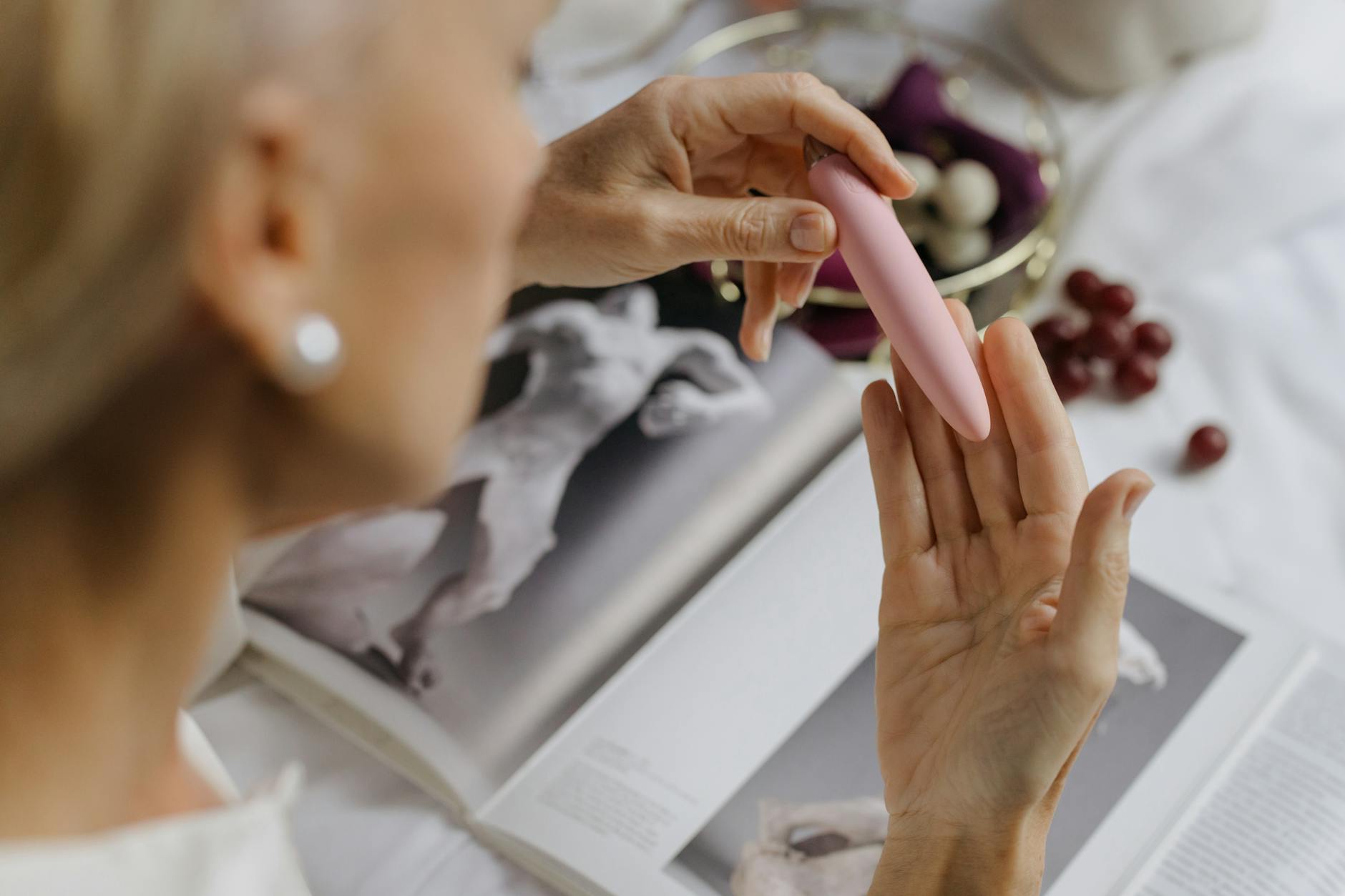
Photo by cottonbro studio on Pexels
Building arousal without triggering pain
When your clitoris is hypersensitive, foreplay isn't optional. It's foundational. Spend 15-20 minutes on indirect stimulation before you even think about using the lemon vibrator. Touch your inner thighs, your labia majora, your lower abdomen. Let your arousal build gradually so the blood flow and natural lubrication prepare your clitoris for actual contact.
Once you do bring the vibrator into play, don't go straight for intensity. Hold it close without full contact for 10-15 seconds. Let the sensation build. Your nervous system needs time to recognize "this is pleasure" instead of "this is pain."
Stop immediately if anything hurts. Pain isn't a normal part of pleasure. If suction on any setting feels sharp or stinging, lower the intensity, add more lube, or reposition. Your body knows what it can handle.
Understanding your arousal cycle during hypersensitivity
Clitoral oversensitivity often fluctuates with your cycle. Days 1-10 of your period? Often more tolerant. Days 15-21? Sometimes wilder. Track what works when. You might find that certain settings feel fine one week and unbearable the next. That's not random. That's your hormones shifting tissue sensitivity and blood flow.
Hormonal birth control can also flatten this variation, which sometimes helps hypersensitive people. Sometimes it makes things worse. If you suspect your pill or patch is behind the hypersensitivity, talk to your doctor about alternatives before you assume the vibrator is the problem.
When hypersensitivity signals something else
If every lemon vibrator setting causes sharp pain, or if hypersensitivity appeared suddenly alongside itching, burning, or unusual discharge, see your GP. Thrush and other infections need treatment. Genital dermatitis requires different management. Pelvic floor dysfunction might need pelvic floor physical therapy. A lemon clitoral vibrator can't fix any of these, but identifying them can.
Don't tough it out. Pleasure shouldn't require pain tolerance.
The mental side of oversensitivity
Hypersensitivity breeds anxiety. You start avoiding touch because you know it'll sting. Your partner hesitates because they don't want to hurt you. Suddenly sex becomes a high-stakes performance where everyone's worried instead of present.
Break that loop by separating exploration from "trying to get off." Use your lemon suction vibrator for 10 minutes purely to understand what feels okay, not to chase an orgasm. Remove the success metric. You're collecting data, not performing.
When you do eventually bring a partner in, show them exactly where and how you want to be touched. Let them hold the vibrator so you can control the pressure. Reclaim agency over your own sensitivity instead of letting it reclaim you.
Combining other tools with your lemon vibrator
You don't have to choose between suction and everything else. Many people find that warming up with a broader vibrator (like a wand) on a low setting feels better than jumping straight to clitoral suction. Then, once arousal builds, switch to the lemon vibrator's gentler approach.
Some prefer combining suction with external pressure. A small vibrator held against your mons pubis (the fatty area above the clitoris) while using a lemon sucker can feel completely different from either tool alone. Experiment when you're not under time pressure.
FAQ: Clitoral Hypersensitivity and Lemon Vibrators
Can clitoral hypersensitivity go away on its own?
It depends on the cause. If it's hormonal (post-ovulation, for example), it usually improves within days. If it's from an infection, treating the infection resolves it. If it's pelvic floor tension or medication-related, it might need intervention. Pelvic floor physical therapy, topical treatments, or adjusting medications can all help. The important part is not ignoring it and assuming it's permanent when it might not be.
Is a lemon clitoral vibrator better than other vibrators if I'm hypersensitive?
For many hypersensitive people, yes. Suction distributes pressure more broadly than traditional vibration, which concentrates force on a smaller area. That said, everyone's different. Some people with hypersensitivity prefer wand vibrators on the lowest setting because they're farther from the clitoris. Test a few styles if you can. The best vibrator is the one that doesn't make you wince.
How long should I wait after an infection before using any vibrator?
Wait until symptoms are completely gone and you've completed the full course of treatment. If you had thrush, that typically means 7-10 days minimum. If you had bacterial vaginosis, at least one full week after treatment ends. When in doubt, wait another week. Reintroducing anything into irritated tissue too early just restarts the cycle.
Can I use a lemon vibrator if I'm on topical estrogen cream for sensitivity?
Yes, but timing matters. Apply your cream, wait 15-20 minutes until it's fully absorbed, and then use the vibrator. If you apply them together, you'll dilute the cream or wash it away. Some people find that after a few weeks on topical estrogen, their hypersensitivity reduces enough that they can tolerate more intense vibration. That's progress.
What if suction makes hypersensitivity worse?
Then suction isn't your tool. Switch to something else. Some people find that broad, low-intensity vibration (like a magic wand on setting 1) feels better. Others prefer manual stimulation with lubrication. There's no rule saying you have to use a lemon vibrator. The rule is that pleasure should feel good, not like a punishment.
Is hypersensitivity related to being "too tight" or having a small clitoris?
No. Hypersensitivity is about nerve sensitivity, not size or tightness. You can have a large, prominent clitoris and still experience hypersensitivity. You can be relaxed and still deal with it. It's a neurological response, not an anatomical one. Treating it doesn't require changing your body. It requires changing your approach.
The path forward
Clitoral hypersensitivity doesn't mean you're doomed to passionless sex. It means you need a different strategy than someone without this particular wiring. A lemon vibrator's gentle suction approach bypasses the direct friction that triggers pain. Slow warm-up, low settings, and patience do the rest.
Your clitoris isn't too much. Your pleasure isn't too demanding. You just need tools and information tailored to how your body actually works. Start slow, pay attention to what feels good, and give yourself permission to explore on your own timeline. That's how hypersensitivity becomes just another thing you understand about yourself instead of something that controls you.