Let's name what's actually happening
Your partner wants more sex than you do. They've made that clear. Maybe they're patient about it. Maybe they're not. Either way, the pressure is there, and when pressure enters the bedroom, arousal usually exits.
This is one of the most common relationship friction points I see, and it's almost never what either person thinks it is. Your partner isn't wrong for wanting intimacy. You're not wrong for not feeling it. But the way you're both handling it right now is probably making the problem worse, not better.
How pressure kills arousal at the brain level
Here's the neurology bit, stripped down: arousal requires your nervous system to shift into what's called parasympathetic activation. That's your "rest and digest" mode. It's relaxed, curious, open.
When your partner is pressuring you for sex, even gently, your nervous system is reading threat. That kicks you into sympathetic activation: fight, flight, freeze. Your brain is literally in the wrong state for pleasure. No amount of foreplay fixes a nervous system in protection mode.
This isn't about how attractive your partner is. It's not about your libido being broken. It's about your body staying defended because somewhere in your gut, you feel obligated rather than invited.
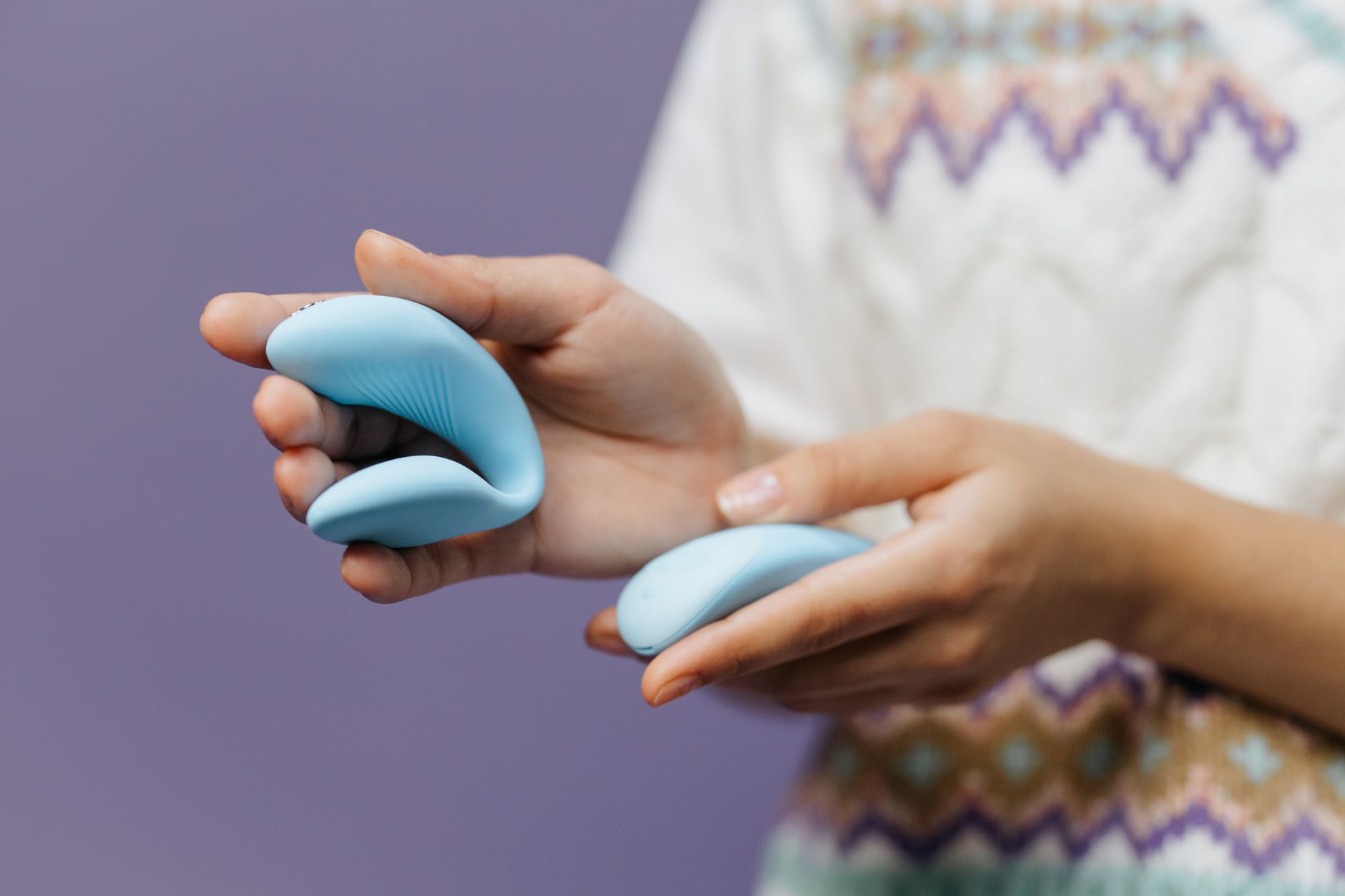
The lemon vibrator changes this equation, but only if you use it the right way.
Why solo exploration shifts everything
When you bring a lemon vibrator or other clitoral vibrator into this dynamic, the first thing you're doing is reclaiming pleasure as yours. Not a gift for your partner. Not a duty. Yours.
That distinction matters hugely. Solo exploration with a device like the Lem gives your nervous system permission to relax without an audience, without obligation, without someone's expectations in the room with you.
You're learning what actually turns you on when nobody's waiting for a result. You're discovering the rhythm and pressure that works for your body right now. You're building arousal from the inside out instead of trying to manufacture it because someone else needs it.
That's not selfish. That's foundational.
The solo practice that actually works
Set aside time when you're genuinely alone. Phone off. No sense of needing to wrap this up quickly. Twenty minutes minimum.
Start without the lemon vibrator. Notice what's already there: what thoughts relax you, what fantasies draw you in, what sensations feel good just existing in your body. This is the baseline your partner's pressure has probably covered up.
Then introduce the lemon clitoral vibrator. Start at the lowest setting. The whole point here isn't the destination. It's learning what your body responds to when nobody's keeping score.
Do this weekly for four weeks minimum before you try integrating the vibrator with your partner. This isn't deprivation from partnership. This is building your own pleasure foundation so partnership doesn't become a performance obligation.
What to say to your partner about this
This conversation needs to happen outside the bedroom, when neither of you is activated.
You need to separate three conversations that are probably tangled together: "I care about our intimacy," "I need my own pleasure exploration time," and "I can't perform desire on demand."
Try something like: "I know you want more physical closeness. I do want that too, but something's gotten blocked for me. When I feel the expectation, I shut down. I'm going to spend time exploring pleasure on my own with a lemon vibrator so I can figure out what actually turns me on right now. This isn't about you. It's about me getting my own arousal back so I can actually be present with you."
This isn't a promise that you'll suddenly match their frequency. It's a commitment to your own pleasure, which is actually the thing that rebuilds mutuality.
How to reintroduce partnership after you've reconnected with yourself
Once you've spent weeks building your own arousal, things shift. You've got a genuine sense of what turns you on. You're not in scarcity mode. You're not defending.
Now you can actually invite your partner in. "I've been exploring what works for me. I'd like to show you." That's fundamentally different from "Okay, I'll try." One is an invitation. One is compliance.
When you bring the lemon vibrator into partnered sex, it's not because you're broken and need a device to perform for them. It's because you've discovered it works for you, and you're including them in something you actually enjoy.
Your partner might feel a little insecure when a device enters the picture. That's normal. But if you approach it as "This is what I love, and I want to share it with you," most partners come around quickly. They want you turned on. They just forgot how to get there without pressure.
The boundary-setting that matters most
You need to be willing to say no without explaining. "I'm not feeling it tonight" is a complete sentence. You don't owe a reason. You don't owe a rain check. You don't owe compensation in another form.
Most of the time, when pressure is the problem, it's because someone's been saying yes when they meant no, and resentment has built up. You're now in a situation where even genuine desire gets tangled with obligation.
Breaking that pattern means your no has to actually mean no, and your yes has to actually mean yes.
This is where the lemon vibrator gets interesting. When you have solo arousal available to you, you're not depending on your partner for pleasure. That takes the pressure completely off. You can be honest about what you want instead of managing their disappointment.
What changes when pressure releases
Honestly? Almost everything. Couples I work with often find that once the pressure lifts, desire actually comes back. Not immediately. But over weeks and months, as your nervous system realizes that sex isn't a demand, arousal becomes possible again.
Your partner might still want more than you do. That's a real incompatibility conversation, and sometimes it needs professional help. But you can have that conversation from a place where you're actually connected to your own pleasure instead of defending against theirs.
The lemon vibrator isn't a fix for a mismatch in desire. But it is a tool for reclaiming arousal as yours, not as currency in a relationship. And that reclamation is where actual intimacy usually starts.
Frequently asked questions
Can I use a lemon vibrator alone if my partner feels threatened by it?
Yes, absolutely. A good partner might need reassurance, but they don't get veto power over your solo pleasure. If your partner is telling you that you can't explore your own body alone, that's a control pattern worth naming. You might benefit from couples counseling to work through the insecurity underneath that reaction.
What if my partner wants to watch me use a lemon clitoral vibrator?
That's a separate conversation from your solo exploration time. Some people love being watched. Some people find it activates performance pressure all over again. If watching triggers your sense of obligation, hold the boundary. Your solo exploration is for you. If you want to invite your partner in later, that's your choice. Not theirs.
How long before I feel aroused again if I've been under pressure for years?
It depends on how deeply the nervous system has been protecting itself. Some people notice shifts in 3-4 weeks of solo exploration. Others take 2-3 months. There's no timeline. The point is consistency and genuinely being alone with your own pleasure, not performing for an imaginary audience.
Does using a lemon vibrator make partnered sex less important?
No. Solo pleasure and partnered pleasure are different things. One doesn't replace the other. They support each other. When you know what turns you on alone, you can actually guide a partner toward real intimacy instead of generic foreplay that might not even work for your body.
What if my partner wants to be involved in my pleasure exploration from the start?
That's a control pattern. Real partnership means supporting your partner's independent pleasure discovery, not inserting yourself into it. If they can't give you that space, the issue isn't the lemon vibrator. It's the dynamic.
Should I tell my partner I'm using a clitoral vibrator, or keep it private?
That depends on your relationship and how much privacy you've negotiated. Some couples are fully transparent about pleasure tools. Some people keep solo exploration completely private. Neither approach is wrong. Just be honest with yourself about what you're choosing and why. If you're hiding it because you're afraid of their reaction, that's worth examining separately.
The bigger shift
Using a lemon vibrator when partner pressure is affecting your arousal isn't about the device itself. It's about reinstating yourself as the expert on your own pleasure. It's about separating your desire from someone else's need. It's about discovering that you can feel something real when nobody's keeping score.
Once that's true, partnership actually has a chance to be about connection instead of obligation. That's when real intimacy starts.