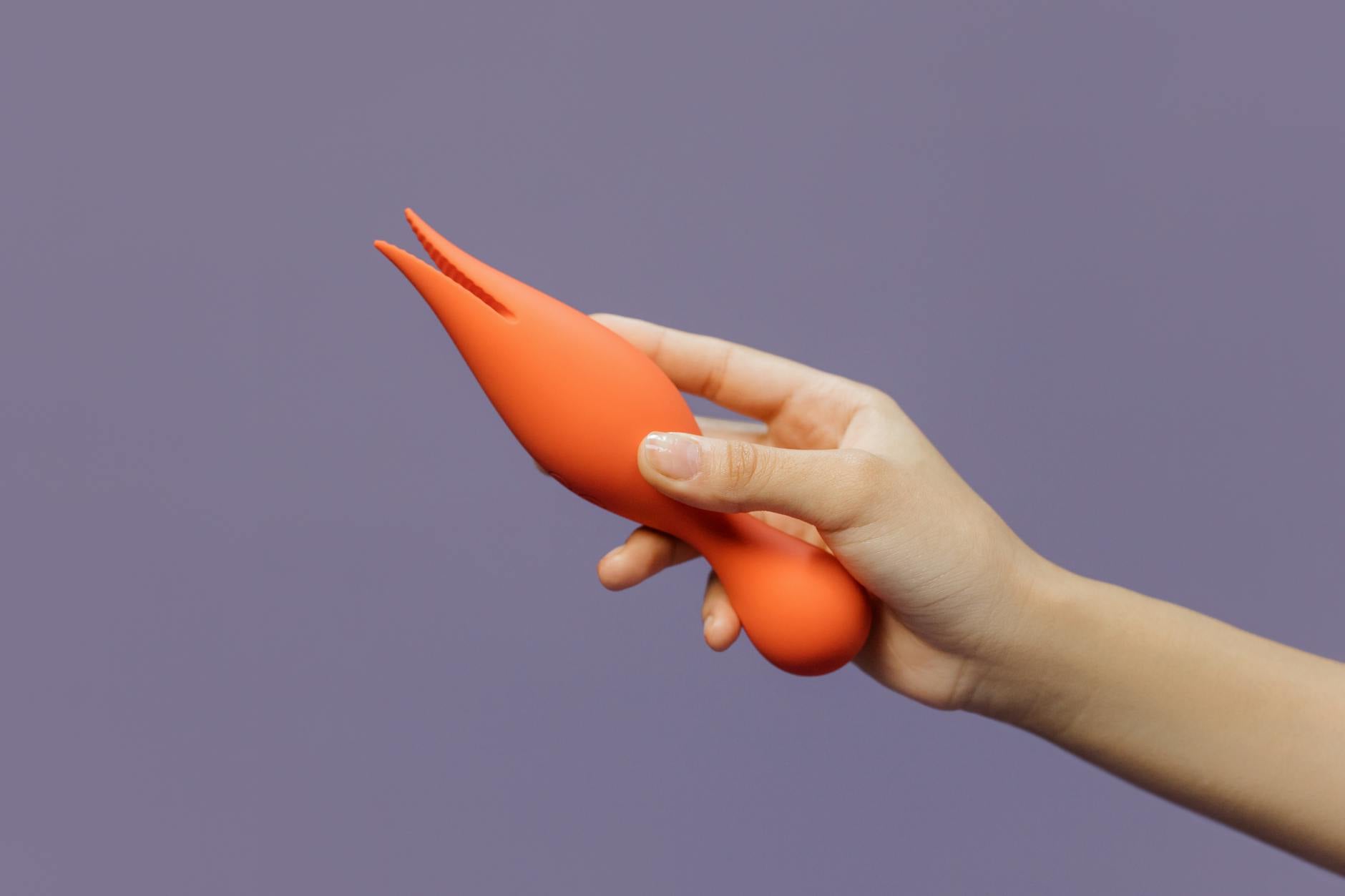
How to Use a Lemon Vibrator When Recovering From Relationship Trauma
Let's be real. After relationship trauma, the idea of pleasure can feel complicated, dangerous, or just plain wrong. Your body might not feel like it belongs to you anymore. The thought of using a toy, even one designed to bring pleasure, might trigger the exact kind of hypervigilance that trauma leaves behind. That's not weakness. That's your nervous system doing what it was trained to do.
But here's what I've seen over decades of working with people rebuilding after harm: self-directed pleasure, approached slowly and intentionally, can become one of the most powerful tools for reclaiming your body as yours. A lemon vibrator specifically, because of how it works, can be part of that process. Not as a replacement for therapy or healing work, but as a practical, somatic tool that sits alongside it.
Why a lemon vibrator works differently after trauma
Most vibrators create stimulation through rapid vibrations that demand your full attention. That intensity, which is great in many contexts, can feel overwhelming or triggering if your nervous system is already in a heightened state. A lemon vibrator works through suction and gentle pulsing, which feels fundamentally different. It's less an assault of sensation and more a sustained conversation with your body.
The suction mechanism also means you have more control. You can pause, release, build again. That autonomy matters deeply when trust in your own body has been shattered.
Another reason lemon clitoral vibrators work well during trauma recovery is gentleness. After harm, especially if that harm was physical, your tissue might be tender or reactive. Suction is less mechanically aggressive than direct vibration. You're working with your body's natural response, not overriding it.
Before you even touch the toy
If you're considering using a lemon vibrator during recovery, first check in with yourself honestly. Are you doing this because you want to reconnect with pleasure, or because you think you should be "over it" by now? There's a massive difference. Forcing yourself into pleasure as proof of healing often just re-traumatizes.
The work that matters most happens in your nervous system. Before introducing any toy, spend time in what I call "ownership practice." This means touching your own body without any goal, without trying to feel pleasure, just noticing what's there. Your skin. Your texture. Your warmth. This isn't sexual. It's sovereignty. It's the foundation.
If flashbacks or panic show up during this ownership practice, that's information, not failure. It might mean you need more time, or more support from a trauma-informed therapist, before introducing a vibrator. And that's completely okay.
The first session: what consent with yourself looks like
When you're ready to introduce the lemon vibrator, create a specific, boundaried experience. This isn't casual or casual. You're teaching your nervous system that this is safe, intentional, and within your control.
Set a time limit. Twenty minutes maximum, and that includes everything. Get alone. Turn off your phone. Light matters too. Many people recovering from trauma do better with soft, familiar lighting, not darkness or bright overhead light.
Before you touch the vibrator, breathe. Seriously. Three cycles of breathing in for four counts, holding for four, out for four. Your vagus nerve (the nerve that regulates your nervous system) responds to this pattern. You're already signaling safety to your body before anything else happens.
Now here's the critical part: you're not turning on the vibrator yet. You're just holding it. Feel its weight. Its temperature. Let your hand get familiar with the shape. This is what consent with yourself looks like. You're moving at your pace, with your choice at every step.
Starting the vibration: low intensity, high awareness
When you're ready, turn it on at the lowest setting. Many people recovering from trauma find that the lowest pulse pattern on a lemon vibrator, like the Lem, is enough for several sessions. Resist the urge to turn it up. Up comes later.
Apply it gently to the outer areas first. Not directly on the clitoris, but on the outer labia or the mons pubis. You're still building familiarity. You're still in the phase where you're checking in with yourself: does this feel okay? Can I breathe? Is my body responding with curiosity or with alarm?
If alarm shows up, stop. Not because something is wrong with you, but because your body is communicating. That's data. Write it down if you can. "Alarm started when I went directly to the clitoris. Okay, we stay on the outer labia for now."
If curiosity shows up, or even just neutrality, that's progress. Pleasure doesn't always announce itself. Sometimes it's just the absence of threat.
Building trust through repetition
The paradox of trauma recovery is that the path back to your body isn't through intensity or achievement. It's through boring, consistent repetition. Showing up the same way, at the same time, and letting your nervous system slowly learn that this is safe.
Use the lemon vibrator the same way for at least three to five sessions before you change anything. Same time of day if possible. Same setting. Same duration. Your brain loves predictability when it's been hurt.
During this phase, you're not trying to orgasm. You're not trying to feel anything in particular. You're just practicing: this is me, alone, choosing to use this tool, and nothing bad happens. That's the entire goal.
Many people discover that by week two or three, when the nervous system finally trusts that this is safe, sensation starts to shift. Pleasure might show up. It might not. Both are fine. The point is you're building a relationship with your body that's entirely within your control.
When to increase intensity
After at least a week of the same rhythm and pressure, if you want to, try moving to a higher setting. Or moving the vibrator slightly more toward the clitoris. Or increasing the session by five minutes.
Here's the key: make only one change at a time. This isn't overthinking. This is how trauma healing works. When you change one variable, you can track whether your nervous system stayed regulated or spiked. That information is gold.
If a new setting or position triggers flashbacks or dissociation, go back to what felt safe. There's no prize for graduating to higher settings. The goal is pleasure that feels like yours, not pleasure that costs you emotional stability.
The role of anchoring and grounding
During and after using the lemon vibrator, your nervous system might spike in unexpected ways. You might feel okay during, then suddenly panicked after. This is common. It's not a sign that you're doing it wrong.
Anchor yourself physically. Keep one hand on your heart or your belly while you use the vibrator with the other. Feel your heartbeat. Notice your breath. This sounds simple, and it is. It's also one of the most powerful trauma recovery tools available, and it costs nothing.
After you finish, stay in that space for a few minutes. Don't jump up to go do something else. Let your nervous system settle. Maybe journal. Maybe just sit. You're giving your body the message: this happened, it was safe, and we're staying here in that safety for a moment.
Partners and the complicated question of shame
If you're in a new relationship and wondering whether to tell your partner you're using a lemon vibrator as part of healing work, here's my take: you don't owe anyone access to your healing process. Your vibrator, your body, your recovery. That's yours.
If you do want to involve your partner eventually, that's a separate conversation from the healing work itself. It might happen months from now. It might not happen at all. The key is that using the vibrator solo is about reclaiming your body as yours, not about proving anything to anyone else.
If your partner pushes to be involved or makes it about them, that's a yellow flag. Real partners respect that healing from relationship trauma sometimes means time alone with your own body.
What to watch for: signs you might need professional support
If using the lemon vibrator consistently triggers severe flashbacks, dissociation, or panic that doesn't settle within an hour, pause and talk to a trauma-informed therapist. Some people need more preparation work before introducing external stimulation.
If you're using the vibrator as a way to numb emotional pain rather than to reconnect with pleasure, that's a sign to slow down and check in with yourself. Healing isn't about replacing one coping mechanism with another.
If shame shows up that won't shift, or if you feel like you're re-traumatizing yourself, that's not something a vibrator can fix. A good therapist can.
But if you're moving slowly, checking in with yourself, building trust gradually, and feeling a growing sense of bodily autonomy, that's the real work. The lemon vibrator is just the tool.
The longer view: pleasure as reclamation
Six months or a year from now, you might find that using a lemon vibrator becomes just a normal part of your pleasure, not heavy with meaning. That's the goal. Not to heal through the vibrator, but to use it as one piece of a larger process of reclaiming your body as a source of joy instead of harm.
For some people recovering from trauma, that journey involves therapy, time, community, and sometimes medication. A lemon clitoral vibrator fits into that picture as a practical tool that helps you practice autonomy, slowly rebuild sensation, and remember that your body can feel good without danger.
Your pleasure matters. Your body is yours. And you get to decide, at your own pace, what that means.
Common questions about vibrators and trauma recovery
Can using a vibrator too soon after trauma make healing harder?
Yes, potentially. If you introduce external stimulation before your nervous system has any sense of safety, it can feel like another invasion. That's why starting slow, and only when you feel ready (not when you think you should be ready) is critical. Work with a therapist if you're unsure about timing.
What if I feel numb when I use the vibrator?
Numbness is a trauma response. Your body is protecting itself. Instead of pushing through numbness, stay curious about it. Is it numbness in one area or everywhere? Does it shift if you breathe differently or change the setting? Sometimes just noticing the numbness without judgment helps your nervous system relax enough to feel something.
Is using a lemon vibrator alone better than with a partner during recovery?
Almost always, yes, at least initially. Solo use is about you and your body. No performance, no need to manage anyone else's experience. Partner use can come later, once you've rebuilt trust in your own body. When you're ready to explore that, check out how to introduce a lemon vibrator to your partner without awkwardness.
How do I know if I'm using the vibrator as avoidance versus healing?
Healing usually involves some discomfort and growth alongside the pleasant parts. Avoidance feels like pure escape. Honest check-in questions: Am I doing this to feel better about my body, or to escape feeling anything? Am I building toward something, or just numbing? Your gut knows the answer.
What if flashbacks happen during vibrator use?
Stop immediately. Ground yourself using the 5-4-3-2-1 technique: name five things you see, four you can touch, three you hear, two you smell, one you taste. Then note what triggered the flashback. Did it happen at a specific setting? A specific position? That information helps you avoid that trigger next time, or work up to it with more support.
Can a lemon vibrator help with sexual dysfunction caused by trauma?
It can be part of the solution. Sexual dysfunction after trauma is real and common. But the vibrator alone won't fix it. You need the nervous system healing, possibly therapy, possibly medical evaluation, and time. The vibrator helps you practice embodied pleasure safely while that deeper work happens.
Next steps: building your own timeline
Recovery from relationship trauma isn't linear. Some weeks you'll feel stronger in your body. Other weeks, old patterns will surface. That's normal. A lemon vibrator can be a consistent, controllable presence during that journey, but it's not a substitute for real support.
If you're considering this path, connect with a trauma-informed therapist who understands that sexuality and healing are intertwined. Read about how to rebuild pleasure and intimacy after a long relationship break. Give yourself permission to move slowly.
Your body isn't broken. Your nervous system is doing exactly what it was designed to do. And you're allowed to take whatever time you need to teach it that safety exists again.
Ready to explore more about using lemon sexual toys intentionally? Learn how to use a lemon vibrator when your nervous system is overwhelmed. It's a different angle on the same healing principle: autonomy, safety, and pleasure at your own pace.
Your pleasure matters. Your healing matters. And you deserve support that honors both.