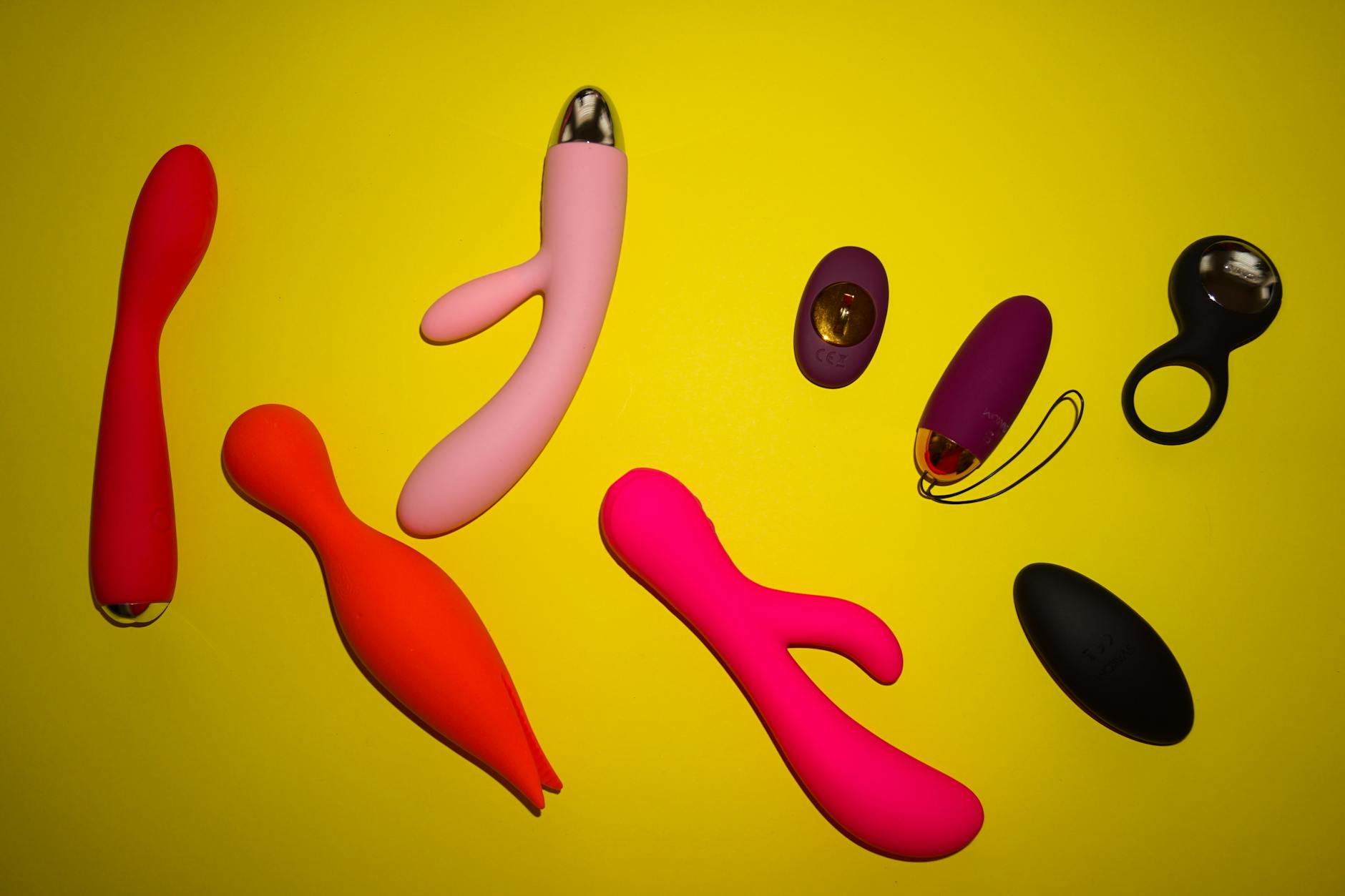
Let's name what's actually happening
Guilt about pleasure isn't weakness. It's a response with roots. Most of us absorb messages about sex from three places at once: family silence or shame around the topic, religious or cultural frameworks that frame pleasure as selfish or dangerous, and a society that tells women their sexuality should be performed for someone else, not owned by themselves. When all three reinforce each other, guilt becomes automatic. You don't think about it anymore. You just feel it.
The thing about guilt is that it's brilliant at protecting us from imagined judgment. What it's terrible at is telling the truth. And the truth is this: using a lemon vibrator, or any clitoral vibrator, is not selfish. It's not shameful. It's maintenance. It's the same category as brushing your teeth or sleeping eight hours. Your pleasure matters because you exist.
Photo by Ron Lach on Pexels
Where guilt actually comes from
Guilt isn't genetic. It's learned. And the architecture of it is usually one of these three things.
Religious or moral conditioning. If you grew up in a faith tradition that framed masturbation as sin, or self-pleasure as betrayal of a future partner, that message lives in your body. It's not a belief you're holding consciously anymore. It's background noise. Your nervous system responds to the thought of touching yourself with a low-level alarm that feels like morality but is actually old programming.
Family silence. If no one in your family ever talked about pleasure, desire, or even basic sexuality, you learned that the topic was dangerous or shameful just by the absence. Silence teaches just as clearly as words. It says: this is not safe to discuss. This is not normal. This is not for people like us.
The performance model. Many women internalize the idea that their sexuality exists for someone else. Your body is for a partner. Your pleasure is something you give, not something you receive. Pleasure for its own sake feels transgressive because you've been taught your sexuality is currency, not yours. Reclaiming solo pleasure feels like theft.
Honestly, most of my clients carry all three of these threads. The guilt isn't one thing. It's a braid.
Why guilt actually interferes with sensation
This is the neuroscience piece, and it matters. Guilt is a stress response. When you're stressed, your nervous system activates the fight-flight-freeze response. Your blood vessels constrict. Your clitoris literally gets less blood flow. Your body tightens. Arousal requires the opposite state. You need parasympathetic activation (rest and digest). You need relaxation. You need safety.
So guilt doesn't just feel bad morally. It makes pleasure physically harder to access. You can be touching yourself with a lemon sucker, everything set up perfectly, and if your nervous system is running an alarm in the background, nothing happens. Your body won't cooperate. Then you feel more guilt, because now you can't even do this right.
It's a stuck loop. Breaking it requires addressing both the guilt and the nervous system response at the same time.
The permission piece (this is the actual work)
You can't think your way out of guilt. You can only feel your way through it. That's why using a clitoral vibrator like the Lem becomes so powerful. It's not just about sensation. It's about practicing permission.
Every time you choose to use it, you're making a statement to your own nervous system: my pleasure is allowed. My body belongs to me. This is not a betrayal. This is care.
Start small. You don't need an elaborate ritual. You need five minutes in a locked room where you won't be interrupted. You need to turn your phone off. You need to tell yourself explicitly: I'm doing this because I deserve to feel good. Not because I'm broken. Not because I'm fixing something. Because pleasure is a basic human experience and I'm allowed to have it.
When guilt shows up, which it will, don't fight it. Name it. "That's the old message. That's not true anymore." Then keep going.
How to actually use a lemon vibrator through guilt
Start with lower intensity. The Lem vibrator comes with multiple suction patterns. Start at pattern 1 or 2. Lower intensity lets you focus on what your body feels instead of being overwhelmed by sensation. Overwhelm can feel like you're doing something wrong. Gentleness feels like care.
Touch yourself first. Before using any vibrator, spend two minutes just touching your vulva with your fingers. No goal. No performance. Just noticing. This reminds your body that touch is normal and it belongs to you. It's a small permission that leads to bigger permission.
Use lubricant. Lube is not just practical. It's psychological. It says: I'm taking care of myself. I'm preparing. This matters enough to get the details right. Water-based lube works best with silicone toys.
Set a time limit. Give yourself 15-20 minutes. A container of time actually reduces anxiety. You're not committing to a big experience. You're just trying something. When the time is up, you can stop, no guilt about that either.
Do it when you're alone and rested. Not when you're already frayed or rushed. Not in a space where someone could walk in. Your nervous system needs to believe it's actually safe. It can't relax when there's a threat.
Expect nothing. This is crucial. Don't orgasm as the goal. Don't sensation as the goal. The goal is 15 minutes of self-attention. That's it. If an orgasm happens, great. If it doesn't, you still did the thing. You still practiced permission.
What changes when you keep doing this
I've worked with many clients rebuilding their relationship to pleasure after guilt. The first time is hard. The second time is less hard. By the third or fourth time, your nervous system starts to believe this is actually safe. The guilt softens. It doesn't disappear overnight, but it stops being the loudest voice.
Then something shifts. You start noticing sensations you couldn't access before. Your body relaxes into the experience. You feel less like you're doing something wrong and more like you're doing something for yourself. The lemon clitoral vibrator stops feeling like a transgression and starts feeling like a tool. Like something that belongs to you.
Many people also find that this practice helps with partnered sex. When you know what your own body feels like in a relaxed state, you're less dependent on a partner to create pleasure for you. You're more present. You're more vocal about what works. The shame lifts and you become an active participant in your own sexuality instead of a passive receiver.
A note on religious or cultural guilt
If your guilt is rooted in deep religious tradition, this isn't something I'm asking you to solve alone or quickly. It's okay to work with a therapist, particularly one trained in religion-informed therapy. Guilt that old lives in multiple layers. Sometimes it needs more than self-permission. It needs witness. It needs dialogue.
But I want to be clear: you are not broken for having this guilt. You are not selfish for wanting to address it. You are not betraying anyone by reclaiming your own body. Your pleasure is not a sin. It's a sign that you're alive.
FAQ
Is it selfish to prioritize my own pleasure when I have a partner?
No. It's actually the opposite. When you're comfortable with your own pleasure, you're less resentful, less dependent on a partner for all your happiness, and more present in partnered sex. You're also able to model for your partner that their pleasure matters too. It's not selfish. It's healthy.
Can guilt actually prevent orgasms?
Absolutely. Guilt activates the stress response, which restricts blood flow to your genitals and tenses your pelvic floor. Both of those things make orgasm harder. If you're struggling to orgasm, addressing guilt is often as important as the physical technique.
What if I feel guilty even while using a vibrator?
That's normal. The guilt might not disappear the first time. You might feel it the whole experience. The work is to keep going anyway. To practice the choice. To tell yourself the truth: I'm allowed to feel good. Over time, the guilt loosens its grip.
Does using a clitoral vibrator like the Lem change what partnered sex feels like?
Often yes, in good ways. When you understand your own pleasure, you can communicate better with a partner about what works. You're less in your head. You're more present. Some people also find that the sensation of a lemon vibrator is different enough from partnered touch that it expands their understanding of what pleasure can feel like.
How do I explain to a partner why I want to use a vibrator alone?
Simple: "I want to understand my own body better. This isn't about you. It's about me getting to know myself." A partner who respects you will understand. If they don't, that's information about the relationship, not about your right to self-pleasure.
Will using a vibrator make me less interested in partnered sex?
No. The research doesn't support that. People who use vibrators for solo pleasure actually tend to have more partnered sex, not less. Understanding your own pleasure increases desire overall.
What comes next
Guilt about pleasure is one of the most common obstacles I see in my therapy practice. It's also one of the most treatable. You don't need to spend years unpacking it. You need permission, practice, and patience with yourself.
Using a lemon vibrator becomes the practice. Every time you choose yourself, you're telling a new story to your nervous system. Over time, that story sticks. Your body learns it's safe to feel good. Your mind stops arguing.
Start with five minutes. Tell yourself the truth. Your pleasure matters. Then let the lemon vibrator do what it was designed to do. Help you feel alive.