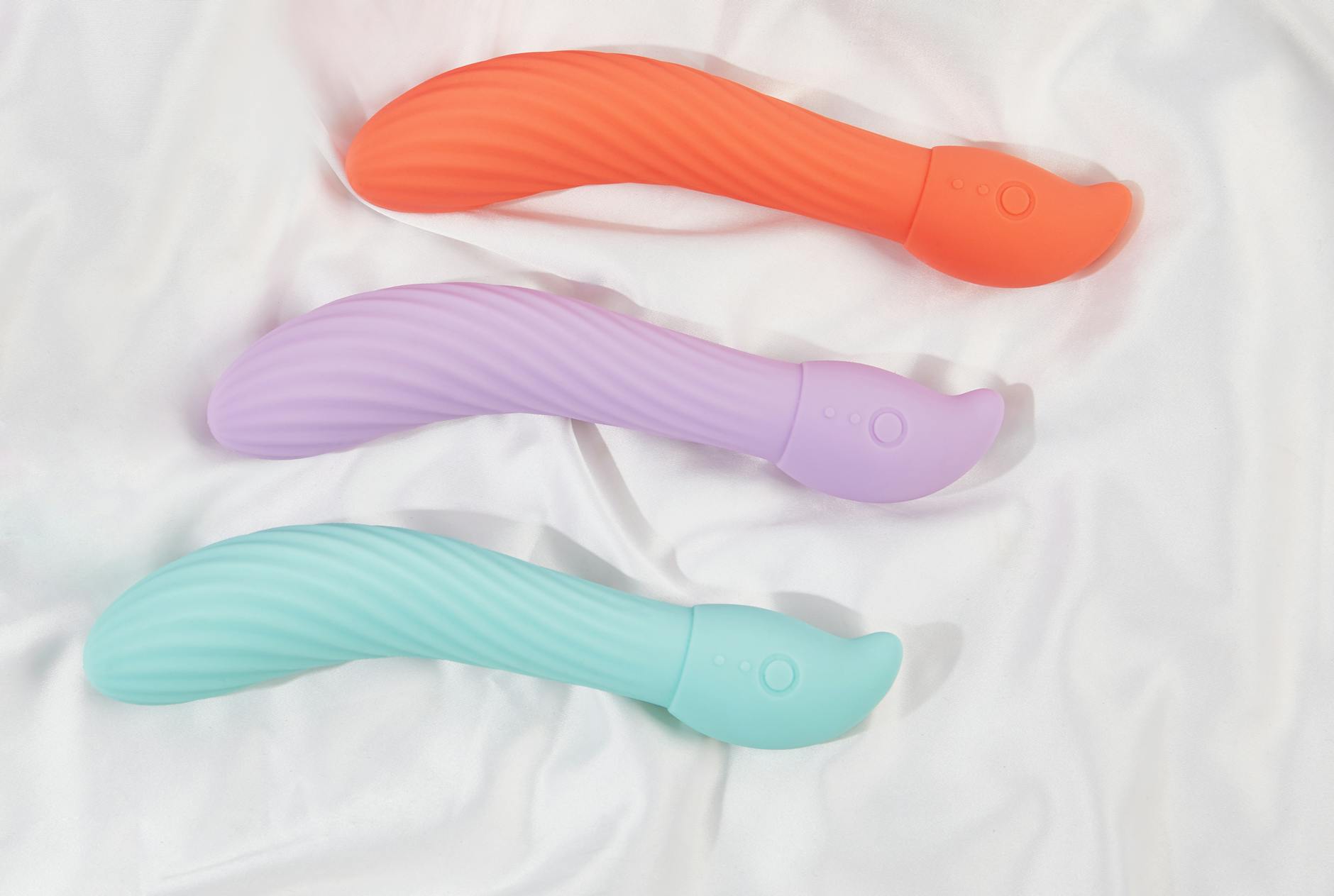
How to Use a Lemon Vibrator When Your Body Responds Slower Than Before
Honestly, this is one of the most common concerns I hear from my clients, and it's also one of the easiest to fix once you understand what's actually happening.
Your body hasn't broken. Arousal just doesn't move as fast as it used to, and that's not a flaw. It's a recalibration.
Somewhere in your thirties or forties, your nervous system stopped firing arousal signals like a car accelerating from zero to sixty. Instead, it ramped up more like a dimmer switch. That feels slower. It feels like something is wrong. But here's the thing: that dimmer switch often leads to deeper, more varied pleasure than you've ever had.
What actually changes in your body over time
Let's start with the physiology, because understanding it takes away the shame.
As you age, blood flow to genital tissue changes. Estrogen and testosterone production shift. The vaginal tissue becomes thinner and loses elasticity. The clitoris, which houses about eight thousand nerve endings, doesn't change much, but the surrounding tissue around it does. Arousal still happens, but it requires more sustained stimulation, more time, and often more direct input.
Here's what doesn't change: your capacity for pleasure. Your ability to orgasm. Your desire (unless something else is happening, like depression or relationship stress). The neural pathways for sensation. Any of that.
One study on sexual function across the lifespan found that people who reported the most satisfying sex lives in their fifties and sixties were not those who had the fastest arousal response. They were the people who gave themselves permission to slow down, invested in better foreplay, and used tools that worked with their bodies instead of against them.
Why slower arousal isn't a problem (it's actually an advantage)
Three reasons this shift is better than you think:
Extended pleasure window. When arousal takes twenty minutes instead of five, you're not losing out. You're gaining fifteen extra minutes of building sensation. People often tell me that the best orgasms come at the tail end of a longer warm-up, not the beginning.
More control. Fast arousal can feel urgent, reactive, sometimes out of your hands. Slower arousal gives you time to notice what you like, adjust pressure and rhythm, check in with yourself. That control translates directly to stronger orgasms.
Time for communication. If you're with a partner, slower arousal creates space for conversation. You can say what you want in the moment, ask for what you need, respond to feedback. Rushed intimacy leaves no room for that.
How lemon vibrators are actually ideal for slower warm-up
This is where I see the biggest shift in my clients' experience.
A lemon clitoral vibrator uses air-suction stimulation instead of vibration alone. That means it doesn't rely on the same rapid firing of nerve endings that traditional vibrators do. Instead, it creates a gentle wave of pressure and release. For a body that needs more time to build arousal, suction works more effectively because it activates deeper nerve pathways rather than surface stimulation.
Translate that to real life: with a standard vibrator, you might spend twenty minutes at max intensity waiting for arousal to build. With a Hello Nancy lemon vibrator, you can use patterns one through three for that same twenty minutes, and arrive at a much stronger, more sustained arousal state.
The lem vibrator is also gentler on thinner tissue, which matters if you're experiencing any tissue changes. You can build sensation gradually without the microtrauma that sometimes comes from repetitive vibration at high intensity.
The actual timeline for slower bodies
Here's what I recommend to clients who feel like they're "taking too long":
Budget thirty minutes from start to finish. Not because you're broken, but because that's how long pleasure actually takes now. That thirty-minute window usually breaks down like this:
Ten minutes of non-genital touch and kissing. This wakes up your nervous system and starts the blood flow cascade.
Ten minutes of external foreplay without the toy. Manual stimulation, oral sex, or a partner's hands on your body. This brings you to baseline arousal.
Five to ten minutes with the lemon vibrator at lower patterns (one through three). This is where the deeper sensations build. Stay here longer than you think you need to.
The final minutes of higher intensity if you want to reach orgasm, or simply staying in the plateau phase if you're enjoying the sensation without climax.
That timeline sounds long until you try it. Most of my clients find that the entire experience feels richer, not slower.
Specific techniques for longer warm-up
Three ways to work with slower arousal instead of fighting it:
Use pattern switching instead of intensity escalation. Start with pattern one on your lemon clitoral vibrator. After five minutes, switch to pattern two. Five more minutes, pattern three. This gives your nervous system time to process each sensation level and prepare for the next. You're not pushing harder; you're diversifying the stimulation.
Apply gentle pressure around the clitoris, not directly on it. When tissue is thinner and arousal is building slowly, direct contact can feel too intense. Try pressing the vibrator against your pubic mound or the sides of your vulva, letting the suction waves ripple across the area rather than concentrating all sensation in one spot.
Combine the toy with other sensations. Slow arousal responds beautifully to layering. Have your partner kiss your neck while you use the lem vibrator. Listen to audio that turns you on. Use your other hand on your breasts or your inner thighs. These inputs signal your nervous system that pleasure is happening from multiple directions, which accelerates the overall response even if individual stimulation feels slower.
When slower arousal might signal something else
Slower arousal is normal and healthy as you age. But if arousal has completely disappeared, or if it's paired with other changes like pain during sex or a major shift in desire, see someone. Genitourinary syndrome affects many people as estrogen shifts, and it's highly treatable with topical creams or HRT. Thyroid issues, depression, and medication side effects can also flatten desire. A healthcare provider trained in sexual health can usually pinpoint what's happening in a few minutes.
But "it takes longer now" on its own isn't a problem. It's a feature.
How to talk to your partner about needing more time
If you're partnered, this conversation matters more than the technique itself.
Instead of "I'm too slow now," try: "My body feels best when we have more time together. I know exactly what I like, and I want us to explore it slowly."
That reframe shifts the conversation from deficit to desire. You're not apologizing for your body. You're asking for what works.
If your partner has always expected fast arousal, you might need to explain why the change happened. Hormonal shifts, aging, the natural evolution of your nervous system. Make it clear that this isn't about them. It's not about attraction or interest. It's about physiology, and it's normal.
Many partners actually love the permission that slower sex gives them. It lets them slow down too. It creates more intimacy, more conversation, more presence. What feels like a loss often becomes a gain.
The lemon vibrator as your new baseline
Once you find the right patterns and rhythm with your lemon clitoral vibrator, you'll probably notice something: you stop comparing yourself to how your body worked at thirty. You're just working with who you are now.
That's the real shift. Not faster arousal, but better acceptance of how arousal actually works for you.
People also ask
How much longer should arousal take as you age?
There's no single timeline, but most research suggests arousal takes about two to three times longer as you move through your forties and beyond. Someone who reached baseline arousal in five minutes at thirty might need ten to fifteen minutes at fifty. Some variation is normal, and some people experience minimal change. If it's affecting your satisfaction, exploring tools like a lemon vibrator can help you build arousal more efficiently without rushing.
Can lemon vibrators help with slow arousal?
Yes. The air-suction mechanism in a lemon clitoral vibrator activates deeper nerve pathways than vibration alone, which means your nervous system doesn't have to work as hard to register pleasure. Lower patterns on the lem vibrator often feel more effective for slow-building arousal because they don't rely on rapid stimulation. Many clients find they reach stronger arousal with less intensity.
Is it normal for my clitoris to feel less sensitive as I age?
Nerve density doesn't actually decrease with age, but tissue density and blood flow do change. Your clitoris might feel less responsive because the surrounding tissue is thinner, which can muffle sensation. This often resolves with better blood flow, which comes from longer warm-up time and consistent stimulation. If numbness or severe desensitization appears suddenly, it's worth discussing with a healthcare provider.
Should I use a higher intensity vibrator if my body responds slower?
Not necessarily. Higher intensity can actually make things harder by fatiguing your nerves. Lower patterns used for longer periods are often more effective. With a lemon clitoral vibrator, patterns one through three applied for ten to fifteen minutes usually produce stronger arousal than max intensity for two minutes. Experiment to find what works, but don't assume you need more power.
Can hormonal changes affect how quickly I get aroused?
Absolutely. Estrogen shifts affect blood flow, tissue hydration, and neurotransmitter production. Testosterone changes affect desire and arousal speed. These aren't things you caused or can simply willpower through. They're biological. The good news is that adjusting your timeline, using better tools, and giving your body what it actually needs often makes arousal feel easier again, even if it's slower.
What if my partner gets impatient with longer warm-up?
This is a relationship conversation, not a sex conversation. Your partner needs to understand that your body works differently now, and that difference isn't a problem to solve. If they're impatient with twenty or thirty minutes of intimacy, the issue might be about expectations or presence, not your body. Try framing it as extended pleasure for both of you, not as you needing accommodation. If resentment persists, couples counseling can help.
Slower arousal feels like a loss until you work with it instead of against it. Once you give your body the time and the right tools, like a Hello Nancy lemon vibrator, you often discover that your pleasure is deeper, more intentional, and more satisfying than it's ever been.
Your body isn't broken. It's just telling you that it wants something different now. Listen to it.
Ready to explore what slower arousal can feel like? Get in touch if you have questions about which tool might work best for your body.