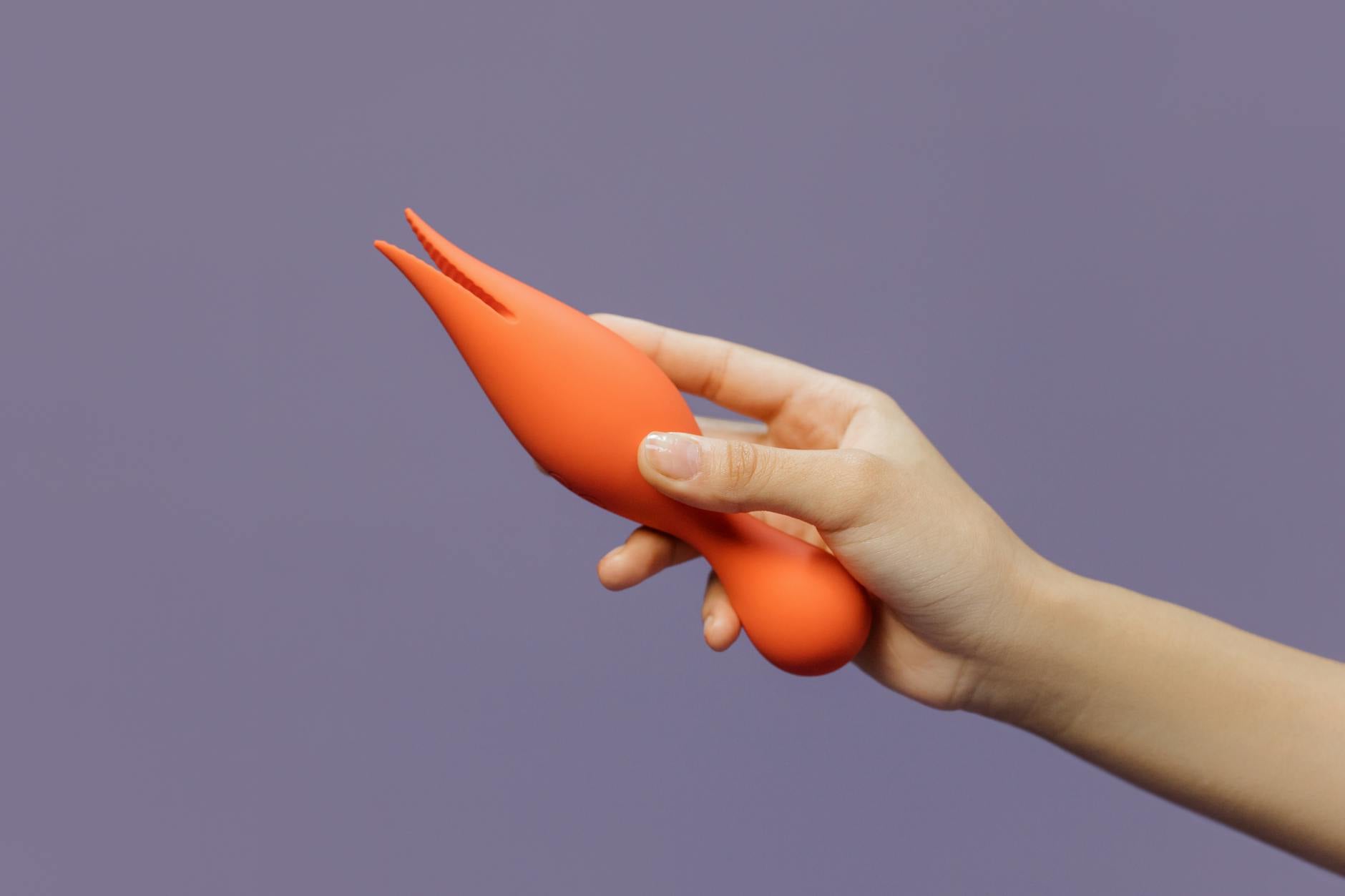
Let's talk about the postpartum timeline nobody explains
Your body has just done something extraordinary. The conversation around recovery usually stops at "six weeks clearance," but that's where the real questions actually start. When can you use a lemon clitoral vibrator? What does safe reintroduction actually look like? And how do you rebuild sensation and intimacy when everything feels different?
Honestly, here's the thing: pleasure after birth isn't something you're doing wrong if it feels complicated. Your body has been through trauma (yes, birth is trauma, even uncomplicated birth). Your nervous system is rewiring. Hormones are cascading in directions they haven't gone before. Pleasure isn't the priority. But when you're ready, it can be part of healing.
The six-week boundary is a starting line, not a finish line
Your OB clears you for "intercourse" at six weeks. That's a legal and medical checkpoint, not a pleasure checkpoint. It means the obvious bleeding has stopped and your cervix has closed. What it does NOT mean: your pelvic floor is recovered, your perineum (if it was torn or cut) has fully healed, your nervous system is calm, or you're ready for intense sensation.
Postpartum healing is nonlinear. Some people feel ready at six weeks. Most don't. Some take months. This is completely normal.
If you had a vaginal tear (first, second, third, or fourth degree), healing happens in layers. The visible surface closes in two to three weeks. The deeper layers take eight to twelve weeks to fully remodel. Scarring continues to remodel for up to a year. A lemon vibrator's gentle suction is gentler than fingers or penetration, but gentleness still matters on compromised tissue.
What's actually happening to your body right now
Vaginal tissue is inflamed. Blood flow is redirected toward healing. Estrogen is in the basement (especially if you're breastfeeding). The pelvic floor muscles are either tight with tension or loose and unfocused. Nerve endings are rewiring. Your brain is in survival mode.
In this state, direct vibration can feel overwhelming, almost painful. The suction-based stimulation that lemon clitoral vibrators provide is actually ideal for postpartum tissue because it doesn't require the same mechanical friction. It's gentler and often feels more intuitive to a healing body.
But timing still matters. Here's the realistic breakdown:
Weeks 1-2: Don't even think about this. You're bleeding, you're exhausted, your body is in acute recovery.
Weeks 3-6: You can start exploring solo touch gently, but vibrators are still a no. Your perineum is still actively healing.
Week 6 onward: If your healthcare provider cleared you and you're not in pain, you can cautiously introduce a lemon vibrator. Start with the lowest settings, shortest sessions, and solo exploration first.
Weeks 8-12: Most people feel genuinely ready at this point. Tissue has remodeled, bleeding has fully stopped, and sensation is returning.
How to safely reintroduce a lemon vibrator postpartum
Think of this like physical therapy. You wouldn't sprint after a knee injury just because the PT said walking was okay. Same logic applies here.
Start with settings 1 and 2 only. The Hello Nancy lemon vibrator has multiple intensity levels. Postpartum, you're working with heightened sensitivity and tissue that's still reorganizing nerve connections. The gentlest settings feel stronger than they would have pre-birth.
Keep sessions short. Five minutes max. Your body isn't used to this stimulus yet. Overdo it and you risk inflammation, which feels like soreness the next day.
Use lots of lubrication. Water-based lube is your friend. Postpartum estrogen depletion (especially if breastfeeding) means natural lubrication is minimal. This is not a sign something's wrong. It's just biology.
Wait for calm moments. If your nervous system is in fight-or-flight (baby crying, sleep deprivation, overstimulation), pleasure is literally neurologically unavailable. Choose moments when you feel genuinely relaxed. This might be rare.
Listen to pain versus sensation. There's a difference between "this feels intense and unfamiliar" (normal) and "this hurts" (stop). If anything feels sharp or tearing, stop. That's not intuition being cautious. That's your body saying something isn't ready.
The mental piece nobody warns you about
Your body doesn't just change physically. The way you inhabit it changes. You're touched out by a baby who needs your body constantly. Your sense of ownership over your physical boundaries has been reorganized. Touch can feel like one more demand instead of one more pleasure.
This is really common, and it doesn't mean your desire is gone forever. It means your nervous system needs time to recognize that touch can be for you, not just for someone else's need.
Solo exploration with a lemon vibrator can actually help here. It's a low-pressure way to reconnect with sensation without the complexity of partner dynamics. No one else's timeline, no one else's expectations. Just your body, healing, remembering what pleasure feels like.
If you have a partner, this solo work actually helps the transition back to partnered intimacy. You figure out what feels good now, what your new baseline is, before bringing that back into shared experience.
When to talk to your healthcare provider
Some postpartum situations need professional input before you reintroduce any stimulation.
If you have fourth-degree tearing (extending into the anal sphincter), get explicit clearance from your surgeon before using any vibrator. Same if you have significant scar tissue or keloid formation. If you're dealing with pain during sex months postpartum, a pelvic floor physical therapist is your actual best resource (way more useful than generic advice).
If you're experiencing postpartum depression or postpartum anxiety, sensation and intimacy are harder to access. Treating the underlying condition usually helps more than forcing yourself to engage with pleasure before you're ready.
And if breastfeeding is causing you significant touch aversion, that's worth discussing with a lactation consultant or therapist. It's common and very treatable, but it's also information worth having.
Building back to partnered intimacy
If you're coupled, the timeline gets more complex because now you're managing two bodies, two sets of expectations, and a relationship that's been fundamentally changed by the addition of another human.
Many partners feel rejected when intimacy isn't immediately available at week six. Some feel guilty about wanting anything when their partner is clearly overwhelmed. What actually helps: explicit conversation about the postpartum timeline, about what solo exploration looks like, and about the fact that pleasure might look completely different for a while.
Using a lemon vibrator isn't a shortcut back to "normal" sex. But it can be a bridge. It can be a way to rebuild sensation together, to play with what feels good in this new body, without the pressure of performance or the expectation of traditional intercourse. Some couples find that reintroducing pleasure together, gently and without timeline pressure, actually rebuilds intimacy faster than following the six-week directive.
If you've been dealing with how to navigate this transition, our guide on how to use a lemon vibrator with your partner without awkwardness breaks down the conversation part in detail.
The longer timeline: when does everything actually normalize
Fuller recovery for most people takes around six months. By that point, tissue has fully remodeled, hormones are stabilizing (if you're not breastfeeding) or starting to rebalance (if you are), and your nervous system recognizes that you're not in active danger anymore.
At that point, a lemon clitoral vibrator works exactly as it would have pre-birth. You can use any setting, any duration. Sensation is back to baseline.
But some people find that their baseline actually changes after birth. The things that worked before feel different now. This isn't wrong. Your body has shifted. Exploring what works now, without trying to recreate what used to work, is often more satisfying than fighting for the old version of pleasure.
FAQ
Can I use a lemon vibrator if I'm breastfeeding postpartum?
Yes, but timing and lubrication matter more. Breastfeeding suppresses estrogen, which means vaginal tissue is drier and more sensitive than it might otherwise be. Postpartum bodies are also working hard to produce milk, so energy levels affect desire. Nothing about breastfeeding directly prevents you from using a lemon vibrator once you're cleared by your provider, but understanding that your baseline might be lower is helpful.
What if I had a C-section instead of a vaginal birth?
C-section recovery is different but not necessarily faster. You have major abdominal surgery healing in addition to all the hormonal postpartum stuff. The incision site is tender for months. Your pelvic floor actually still needs recovery even though nothing tore vaginially (pregnancy itself stressed the pelvic floor). Vaginal tissue is still inflamed and estrogen-depleted. All the same guidelines apply for introducing a lemon vibrator. Six weeks clearance still applies. Most people feel ready around eight to twelve weeks.
Is it normal to have no desire for a lemon vibrator or any intimacy for months postpartum?
Completely normal. Your body, brain, and nervous system have been through enormous change. You might be sleep-deprived, touched out, dealing with pain, or working through postpartum mood changes. Desire doesn't have a timeline. Some people feel it return at three months. Some take a year. This is not a sign of a relationship problem or a personal problem. It's a sign your system is busy healing.
Can lemon vibrators help if I'm experiencing pain during postpartum sex?
Sometimes. Gentle exploration with a lemon vibrator, especially solo, can help you understand what's actually tender and what might feel better with different pressure or angle. But if you're experiencing consistent pain, that's worth a pelvic floor PT evaluation before relying on tools to compensate. Pain is information.
How do I know if my body is actually ready for a lemon clitoral vibrator or if I'm just forcing it?
Readiness feels like: curiosity instead of obligation. Your own desire, not someone else's. Absence of pain or significant discomfort when you're explored with touch before the vibrator. A moment when you genuinely have mental and emotional space (not just physical space). If you're checking these boxes, you're probably ready to experiment gently. If you're checking them and thinking about this post, you're ready.