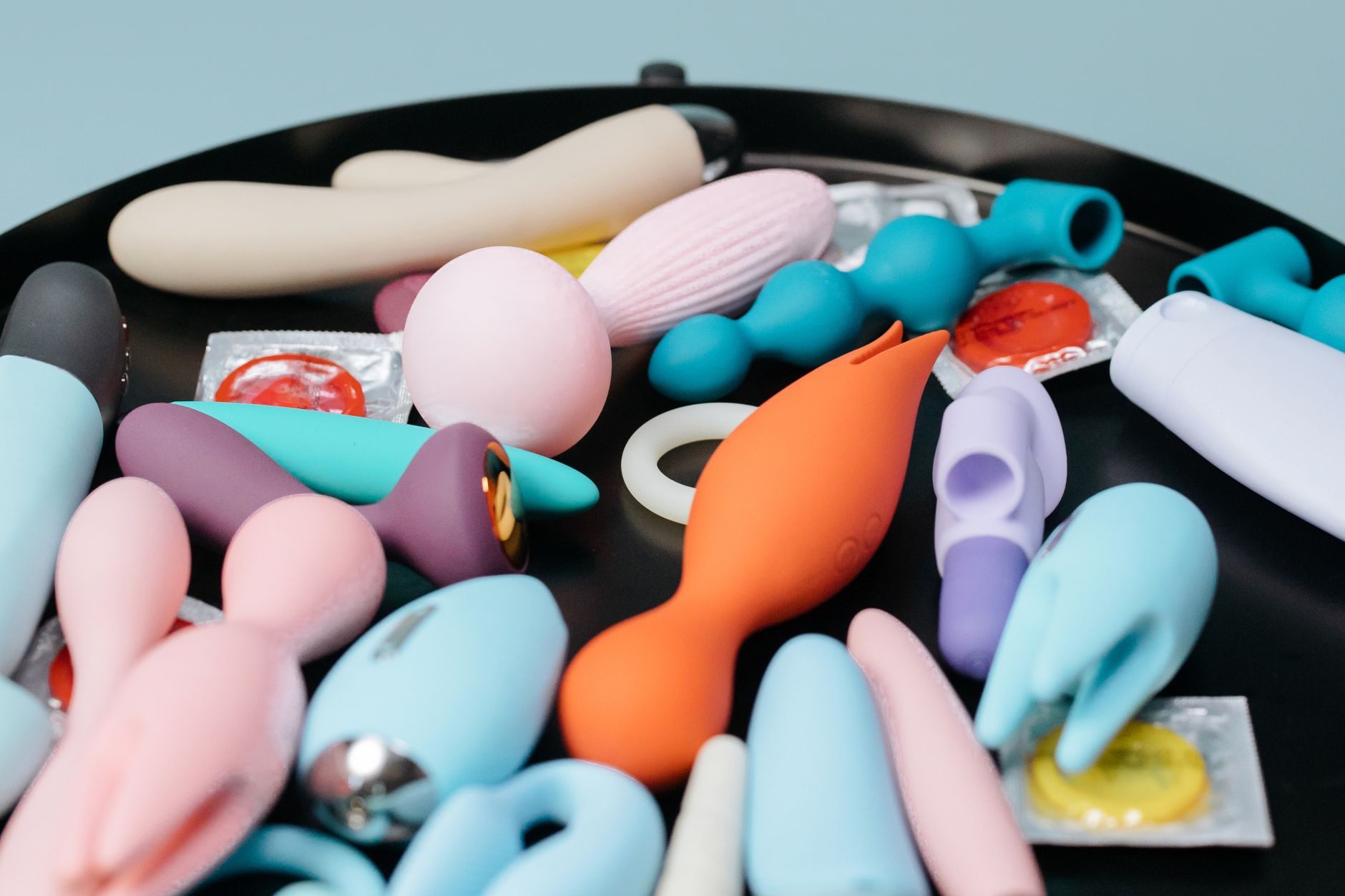
The thing nobody tells you about introducing toys to partnered sex
It's not about the toy. It's about what the toy represents, what it might mean to the person you're with, and whether you can talk honestly about pleasure without accidentally triggering a shame spiral or a ego bruise. That's the real work.
I see this in my practice constantly. Someone brings home a lemon vibrator or a clitoral sucker because they read that these toys work better for sensitive skin or because they finally want to experience the kind of orgasm that's been frustratingly out of reach. That's healthy. But they get stuck at the handoff moment. "How do I even introduce this?" The conversation feels loaded, and suddenly the vibrator becomes less about pleasure and more about perceived failure or rejection.
Honestly? That narrative is backward. Introducing a lemon clitoral vibrator into your partnership, when done thoughtfully, can actually deepen intimacy. But only if you do the talking first.
Why this matters now more than ever
We're in a strange cultural moment where vibrators are less taboo than ever, but we're still not teaching people how to integrate them into existing partnerships without shame or defensiveness. There's a gap between "toys are normal" (the intellectual message) and "my partner will feel replaced or inadequate if I ask for one" (the emotional fear). That gap is where relationships get stuck.
Here's what the research actually shows: couples who explore pleasure toys together report higher sexual satisfaction, better communication, and often stronger emotional intimacy overall. The toy itself isn't magic. The conversation that precedes it is.
The opening line that works
Forget the ambush moment. "I got something I want to try" said mid-foreplay or as a surprise creates defensive energy. Instead, pick a neutral time. Over coffee. Not naked. Not mid-conflict. Just a regular Tuesday when you're both present.
Here's a framework that actually works:
"I want to talk about something that would make my body feel better during sex. It's not about you. It's about what my body needs, and I want you to be part of that."
That sentence does three things at once. It signals that something external is missing (not the partner). It centers your body's needs, which is true. And it explicitly invites them into the experience rather than excluding them. Those three elements disarm the most common anxieties.
Then you explain specifics. "I've been thinking about trying a lemon vibrator because clitoral stimulation works differently for my body than penetration alone." Or "I read that air-pulse vibrators like the Lem are gentler on sensitive tissue and I want to experiment."
Stay factual. Stay focused on sensation and anatomy, not on what's been missing or wrong.
What partners are actually afraid of (and how to address it)
Three fears come up in almost every conversation I facilitate:
"She'll get off on this and not need me anymore." This is real and worth naming directly. You might actually say it: "I know there's a fear that a toy means I don't want you anymore. That's not true. A vibrator does something different than you do. Both can exist." Then actually show that by using the toy together, not in isolation. A lemon clitoral vibrator can absolutely be part of partnered sex.
"He's admitting he can't do this himself." Again, true anxiety. Flip the frame. "My body works a certain way. That's not a failure on your part. It's just biology. And I'd rather figure this out together than quietly resent something I didn't get to experience." A partner who gets defensive about a toy is usually projecting existing insecurity. You can't logic away insecurity, but you can show through action that the toy doesn't replace them.
"This means she's not attracted to me anymore." Low-key, this is what most people are actually worried about. Address it head-on. "I'm attracted to you. My body also has specific stimulation needs. Those two things are both true." And then mean it. If you're introducing a toy because you've checked out of the relationship, that's a different conversation entirely and probably one for a therapist.
How to actually use it together (so it doesn't feel weird)
First time using a lemon vibrator or any clitoral sucker as a couple, things can feel awkward. That's normal. You're literally rewiring a familiar activity. Here's the choreography that works:
Skip the performative moment. Don't make your partner hold the toy or watch you in a way that feels like staging. Integration looks like this: you're together, things are getting hot, and one of you reaches for it like you'd reach for a pillow. Casual. Natural. Not a production.
Use it on yourself first. Your partner doesn't need to be the one holding the lemon vibrator. You can. That actually feels less awkward because you're comfortable with the device and your partner gets to see what works without pressure to perform a specific technique.
Invite participation, don't demand it. "You could try using this on me," not "You have to figure out how to use this now." Some partners want to be involved immediately. Some need time to get comfortable. Let them set that pace.
Talk about it after, lightly. Not a post-sex debrief where you're analyzing every feeling. Just casual "That was really good" or "I liked the sensation of that." Keep it grounded in sensation, not significance.
The real shift that happens
Once a couple gets past the introduction and actually uses a lemon vibrator together a handful of times, something shifts. The toy becomes less symbolic and more functional. It's just a tool that makes the sex better. Your partner realizes they're still desired, you realize you got something you needed, and the conversation unlocked a deeper comfort around talking about pleasure in general.
I've had clients tell me that introducing a clitoral vibrator was the beginning of feeling like they could ask for other things too. "If I can say I need this, I can say I need more foreplay or less pressure or whatever." The toy becomes a gateway to more honest communication about your whole intimate life.
And yeah, some partners will be initially uncomfortable. That's real. But discomfort doesn't mean it's wrong. It means you're both growing into something that requires more vulnerability than you've been practicing. That's actually where deeper connection lives.
What actually breaks this conversation
A few things I see tank the talk before it even starts:
Comparing your partner to someone else. "My ex used to do this..." Automatic shutdown. Even if it's true, it's not helpful.
Introducing it as a suggestion to fix something they're doing wrong. "Maybe if you used a toy on me I'd actually come." Ouch. Reframe: "I want to explore something new with you."
Buying an expensive lemon clitoral vibrator and expecting them to think it's casual. Start with something mid-range. The financial commitment can feel like pressure.
Assuming they'll want the same level of enthusiasm. They might not. They might need time. That's fine.
If they say no
Listen. If your partner is a hard no on toys, pushing will only build resentment. But dig into the why. Is it shame-based? A religious belief? Previous trauma? Feeling of inadequacy? Each reason has a different conversation.
If it's shame-based, you might explore that together over time. If it's religious, you need to respect that boundary. If it's inadequacy, more reassurance and maybe couples therapy. But "I don't want toys in our bed" deserves to be heard, even if it's frustrating.
That said, plenty of people say no initially and change their minds once they see it's not a threat. You don't have to have the full conversation in one night.
The long game
Introducing a lemon vibrator into partnered sex isn't actually about the vibrator. It's about building a relationship where both people can ask for what they need without shame. Where pleasure is collaborative rather than competitive. Where a tool that makes one person feel better is seen as a gift to both people, not a threat.
That takes vulnerability. It takes willingness to be wrong about what your partner is thinking. It takes actually listening instead of defending. But if you can do this conversation well around one toy, you can do it around most hard things.
People also ask
Can you use a lemon clitoral vibrator during partnered sex, or is it just for solo play? Absolutely during partnered sex. A lot of people worry this makes the partner feel left out, but actually the opposite happens when you frame it right. Lemon vibrators and other clitoral suckers can be incorporated into foreplay, used during penetration, or used while your partner is involved in other ways. It's a tool you're using together, not a barrier between you.
Will my partner feel replaced or inadequate if I use a vibrator? This is the number one fear and also the most common misconception. Partners feel inadequate when there's poor communication, not because a toy exists. If you introduce it with honesty and use it in ways that keep them involved, most partners get over the initial anxiety and actually enjoy the sex more because their partner is having a better time. Inadequacy comes from shame, not from tools.
How do I know if my partner is secretly uncomfortable with toys? Ask. Directly. Not during sex, but in a calm conversation. "I want to make sure you're actually comfortable with this." Some people say yes when they mean maybe, out of obligation. That's worth unpacking. You'd rather know they're hesitant than have them resenting it silently.
Is it better to surprise your partner with a lemon vibrator or ask first? Ask first, always. A surprise toy lands as risky and puts your partner in a position where they have to perform enthusiasm they might not feel. Talking about it beforehand means you both know what to expect and there's no awkward energy of "where did this come from?"
What if I introduce a vibrator and my partner wants to use one on me? Mutual toys can be amazing, honestly. You might both discover things you like. Or your partner might be curious about what works for their own body. This is actually a beautiful outcome because it opens the door to exploring pleasure more broadly.
Can a lemon vibrator actually improve a struggling sex life? A toy alone won't fix a broken sexual relationship. But if the relationship is solid and sex just feels routine or unfulfilling, introducing a new tool plus the conversation that comes with it can genuinely wake things up. You're both trying something new together, you're both vulnerable, and that shared experience builds connection.
Introducing pleasure tools into a partnership isn't failure. It's evolution. It's saying "I want this to be better for both of us, and I trust you enough to figure it out together." That's actually one of the most intimate conversations you can have.
If you want more guidance on having these conversations or navigating other relationship transitions, reach out. That's what I'm here for.