Let's talk about what actually shifts
Your hormone levels don't stay constant. Every month (or month-like pattern), your body moves through phases where estrogen and progesterone rise and fall. This changes arousal speed, sensation intensity, and what feels good. And that's before we even mention the bigger shifts that come with age.
Most people think pleasure should be the same every time. It isn't. And that's not a problem to fix. It's information to work with.
How your cycle affects sensation
You probably know that your cycle affects energy and mood. It also affects how your body responds to touch. Here's the pattern most people experience:
Follicular phase (period through ovulation). Estrogen is climbing. Your clitoris is more engorged with blood, tissues are thicker, and sensation tends to feel sharper. Many people find they reach arousal faster during this window. If you use a lemon clitoral vibrator, you might find lower intensity settings feel more satisfying because your nerves are already primed.
Ovulation window (a few days mid-cycle). Peak estrogen. This is often when arousal feels easiest and most intense. Some people experience multiple orgasms more readily here. The clitoral network is maximally responsive. A lemon vibrator set to a mid-range pattern often feels ideal.
Luteal phase (ovulation through period). Progesterone rises while estrogen drops. Tissues thin slightly, arousal takes longer to build, and sensitivity can feel more diffuse than sharp. You might find you need longer warm-up time and stronger, more sustained patterns from your lemon sucker toy.
Menstrual phase. This is highly individual. Some people feel heightened sensation and stronger orgasms. Others prefer gentler touch. If you're menstruating, trust what your body wants in the moment.
Practical adjustments for different phases
Days 1-10 (post-period into follicular rise). Start with pattern 2 or 3 on your lemon vibrator. Your sensitivity is building, so you don't need to go high. If you're warming up, ten minutes of foreplay (or self-touch) is often enough. The clitoris is ready to respond.
Days 10-16 (ovulation window). Patterns 4-6 usually feel satisfying without feeling overwhelming. Arousal builds faster, so if you're moving quickly from zero to orgasm, that's normal. You might reach multiple orgasms more easily during this window. How to use a lemon vibrator for multiple orgasms has deeper technique suggestions if you want to lean into this.
Days 17-28 (luteal phase). Extend your warm-up to 15-20 minutes. Your body needs more time to awaken. Use patterns 5-7 on your lem vibrator. The sensations feel different (less sharp, more full-body), so you might need sustained pressure rather than quick pulses. Slower, longer sessions often feel more satisfying than rushing.
Days 1-5 (bleeding). Honor what your body wants. Some people prefer the vibrator during menstruation, others skip it. If you do use your lemon sexual toy while menstruating, be aware that cervical sensitivity can increase, so aim for clitoral stimulation rather than deep insertion toys.
The bigger picture: hormonal shifts across decades
Your cycle-to-cycle changes are one layer. The longer timeline is another. As you move through your reproductive years and beyond, baseline hormone levels shift. This isn't a decline. It's a transition.
In your twenties and thirties, your baseline estrogen is higher, which means tissues are thicker and arousal can feel quick. In your forties and fifties, estrogen begins to drop gradually, then more sharply. Tissues thin. Arousal takes longer. Orgasms feel different (often deeper, sometimes less intense, sometimes more complex).
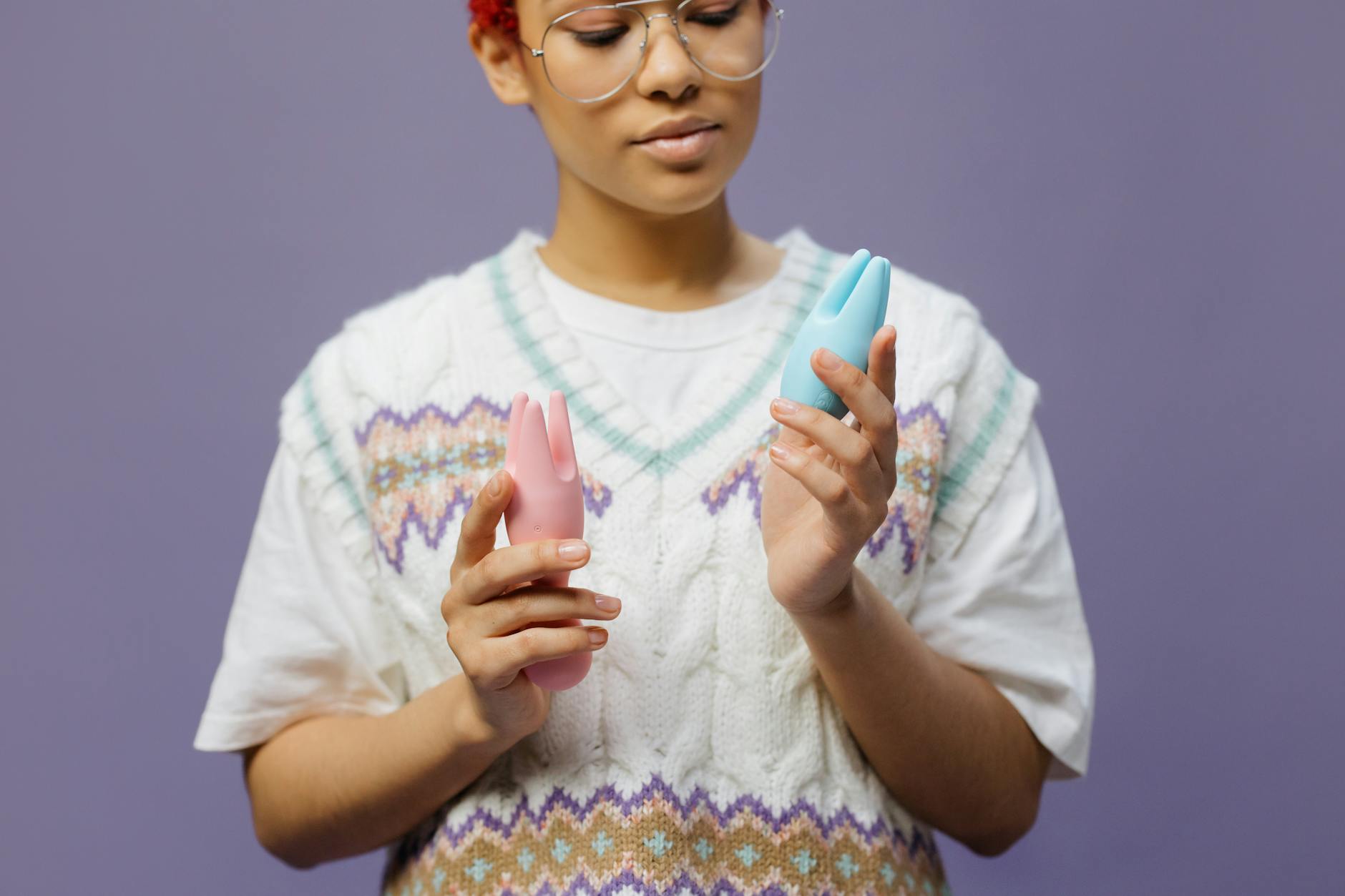
This is exactly where clitoral suction toys like Hello Nancy's lemon vibrators excel. Because they work through suction rather than direct friction, they don't require the same tissue thickness and lubrication that traditional vibrators do. They stimulate without the grinding pressure that can feel uncomfortable as tissues shift.
Using your lemon vibrator through hormonal transitions
If you're entering perimenopause or menopause, start with pattern 1-2 on your lemon clitoral vibrator. Your baseline sensitivity might feel lower because of dropping estrogen, but this doesn't mean you're broken. It means you need different tools.
Lubrication matters more. Water-based lube becomes essential, not optional. Apply it generously around the clitoris, not just inside. This helps the suction cup create a better seal and reduces irritation on thinner tissue.
Warm-up time increases. Budget 20-30 minutes of foreplay before using your lemon vibrator. This might feel long, but it's the difference between okay and genuinely satisfying.
Intensity stays lower, duration gets longer. You might use patterns 1-4 instead of going higher. But you might stay with the toy longer. Ten minutes becomes twenty. The experience shifts from a quick peak to a slower build and plateau.
Sensation spreads differently. Post-menopausal bodies often report that orgasms feel less localized and more distributed through the pelvis and thighs. This can feel less intense initially, then profoundly satisfying once you stop expecting the sharp peak you used to have.
When hormonal birth control is involved
Hormonal contraceptives suppress your natural cycle, which means you don't get those monthly fluctuations. Your arousal pattern becomes flatter across the month, which some people prefer and others find boring.
If you're on hormonal birth control and sensation feels dampened, a few things help. First, confirm it's not just the pill. Depression, stress, and relationship friction all tank arousal independent of hormones. If it's genuinely the contraceptive, talk to your provider about switching formulas. Some pills and patches preserve more arousal than others.
Meanwhile, your lemon adult toys work better with slightly longer warm-up and lower initial intensity. The trade-off is that your baseline might be steadier, which means you don't have to adjust week to week.
Communication with your partner
If you share pleasure with a partner, this cycle stuff matters for both of you. If you're the one with a menstrual cycle, your partner probably notices the pattern without naming it (faster arousal some weeks, slower other weeks). Naming it removes the weirdness.
You might say something like: "My cycle affects when I'm ready quickly versus when I need longer warm-up time. It's not about you or how attracted I am. It's just physiology." That's it. You don't need a PowerPoint. You just need them to know.
If you're using your lemon vibrator together, the same adjustments apply. Slower, longer sessions during your luteal phase. Faster builds during ovulation. How to use a lemon vibrator with your partner without awkwardness goes deeper on the mechanics.
FAQ
Can hormonal changes make clitoral vibrators less effective?
Not less effective, different. Dropping estrogen changes tissue thickness and arousal speed, which means you might need longer warm-up time or different intensity patterns. But clitoral vibrators, especially suction-based lemon vibrators, work across a wide range of hormonal states. The trick is adapting the technique, not assuming the toy has stopped working.
Should I stop using my lemon vibrator during my period?
No, unless it feels uncomfortable. Some people experience heightened sensation during menstruation and enjoy using their lemon sexual toy. Others prefer to skip it. If you do use it, stick to clitoral stimulation and avoid deep insertion toys until bleeding has lightened, since cervical tissue is more sensitive.
Why does my lemon clitoral vibrator feel less intense during my luteal phase?
Because your baseline arousal and nerve sensitivity naturally decrease as progesterone rises. This is not a reflection on the toy. It's how your body works. The solution is longer foreplay, lower starting intensity, and possibly moving to slightly stronger patterns. Many people find that the quality of sensation changes in ways that are actually more satisfying, just different.
Does hormonal birth control affect how clitoral vibrators feel?
Yes. Hormonal contraceptives suppress natural hormone fluctuation, which can dampen overall arousal. If you notice sensation feels muted, it might be the pill. Some formulas preserve more arousal than others. Talk to your provider about switching if it feels significant. Meanwhile, treat it like a luteal phase every week: longer warm-up, starting lower, being patient.
Can I use a lemon vibrator if I'm transitioning through menopause?
Absolutely. Menopause changes how tissues respond, not your capacity for pleasure. Use water-based lube, extend warm-up time, and start with lower patterns. Many people find that suction-based lemon vibrators become more comfortable and satisfying during menopause because they don't rely on heavy friction.
What if my arousal patterns don't match the typical cycle description?
Every body is different. Some people feel opposite patterns from what's described. Some don't notice cycle changes at all. Track what actually happens for you across a few months, then adjust your approach based on that data, not a template. Your body is the expert. The cycle patterns are just a starting framework.
The bottom line
Hormones aren't obstacles to pleasure. They're information. As your body changes across your cycle and across decades, your lemon vibrator stays useful. You just adjust how you use it. Start lower in follicular phases, go a bit higher during ovulation, extend warm-up during luteal, and remember that transitions like perimenopause and menopause don't end pleasure. They reshape it.
Your pleasure matters enough to pay attention to. If you want to dig deeper into how your body responds to different stimulation across these shifts, let's talk.
Sources & References
Goel, M., Grammer, M., & Seal, S. L. (2005). Correlates of sexual function in women taking the new hormonal contraceptives. Contraception, 72(1), 1-10.
Grinceviciute, A., & Dovydaitis, T. (2009). Sexual health in women across the life span. Journal of the American Academy of Nurse Practitioners, 21(3), 170-180.
Palmer, J. R., Rosenberg, L., & Wise, L. A. (2003). Hormonal reproductive factors and risk of incident breast cancer in African American women. American Journal of Epidemiology, 158(1), 76-85.