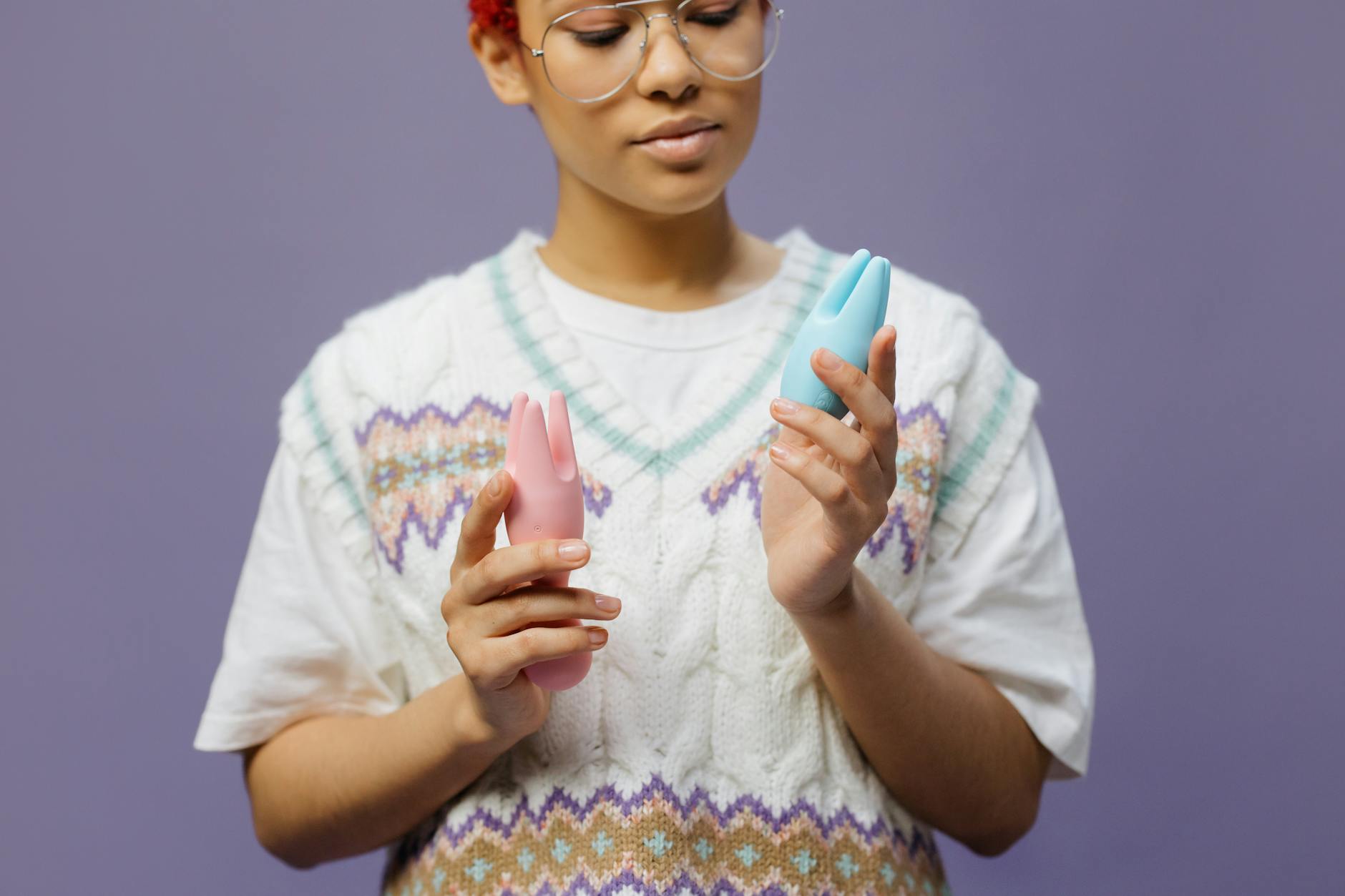
Here's what nobody tells you about desire mismatch
Desire discrepancy in long-term relationships is not a crisis that needs fixing. It's a mismatch that needs naming, and then managing. The difference is everything. Most couples try to solve a communication problem with logistics (more foreplay, different timing, trying something new) when the actual issue is that two people are operating from completely different understandings of what's happening.
One of you still wants sex. The other is... somewhere else. And a lemon vibrator won't close that gap. But it can give you both permission to stop pretending the gap doesn't exist.
What actually changes when desire drops
When a partner's sexual interest tanks, the first impulse is to blame something: stress, health, attraction, relationship problems. Sometimes it's one of those. Often it's none of them. Low desire can arrive because of medication side effects, hormonal shifts, depression, burnout, or just the accumulated weight of being a functional adult with bills and responsibilities. Sometimes it's about the relationship itself. And sometimes it's just... who they are right now.
Here's what I see most often in my practice: the partner with lower desire doesn't announce it clearly. Instead, they withdraw gradually. They initiate less. They say yes but without enthusiasm. They seem distracted. The higher-desire partner then spends months or years interpreting this withdrawal as personal rejection. "They don't find me attractive anymore." "They don't love me." "I'm not enough." None of those might be true. But the lower-desire partner, sensing hurt, often shuts down even more rather than risk conflict.
The issue is rarely that desire itself is broken. It's that you're not talking about the same thing.
Why a lemon vibrator matters when desire is unequal
A lemon clitoral vibrator does something that's quietly radical here: it separates your pleasure from theirs. This is not rejection. This is actually the opposite of rejection. This is you saying, "I'm not waiting for your desire to show up to feel good. I deserve pleasure regardless."
That reframing is important. If you've been trying to sync your desire to theirs, a lemon vibrator gives you back your own body. When you use it alone, you're not making a point. You're not staging a protest. You're just... taking care of yourself. When you use it with a partner who has low desire, you're also not demanding they match your energy. You're asking them to be present without requiring performance.
Many partners find that watching or being near a partner using a vibrator like the Lemon shifts something. Not because it turns them on, necessarily, but because it removes the pressure. They don't have to be the sole source of your pleasure. That's enormous for someone whose desire has tanked.
What to actually talk about first
Before you introduce a lemon vibrator, you need to have a conversation that has nothing to do with toys or sex techniques. You need to understand what's driving the desire shift. Is it:
Relationship-specific? ("I don't feel close to you anymore.") If this is true, a vibrator is a distraction from the real work, which is reconnection.
Body-specific? ("I don't like how I feel in my own skin.") This requires patience and sometimes professional support, not a new toy.
Medication or health-related? (Antidepressants, blood pressure meds, thyroid issues, hormonal birth control.) This is information you can work with. You can talk to their doctor. You can adjust. You can grieve the side effects together.
Mentally or emotionally loaded? (Depression, burnout, grief, identity questions.) This is about supporting them, not trying to turn them on.
Just... how they are? ("I've never had a huge sex drive and I need to stop pretending I do.") This is actually clarifying and can be a relief, once the shame lifts.
Until you know which one you're dealing with, any tool you introduce feels like you're trying to fix them. And that breaks things further.
How to introduce a lemon vibrator without pressure
If you've had that conversation and you're moving forward together, here's how to bring a vibrator into the picture without it feeling like an assignment:
Frame it as self-care, not performance. "I want to explore what feels good for me, and I'd like you to be around if you want to be. No pressure to do anything." That's it. No expectation.
Start solo. Use your lemon clitoral vibrator alone first, several times. Get comfortable with it. Figure out what you actually like. Then, if your partner ever expresses interest in being present, you're not discovering it for the first time while they're watching.
Keep it low-key initially. Don't make it a production. Don't set a special night or light candles unless that's genuinely your style. The lower-desire partner often feels performance anxiety already. Adding ceremony can make it worse.
Notice if it shifts anything. Sometimes, when a higher-desire partner reclaims their own pleasure, it actually wakes something up in the lower-desire partner. Not always. But sometimes the "I don't want sex" transforms into "I don't want performative sex, but I might want to be nearby while you feel good." That's different. That's workable.
The conversation about pleasure when desire is divided
Once you're using a lemon vibrator (alone or together), you need a follow-up conversation. Not immediately. But soon. And this one is gentler.
"I'm noticing something when I do this. I feel less resentful. I feel more like myself. I wanted you to know." That's often enough. You're not asking them to match your desire. You're just naming that taking care of yourself is actually good for the relationship.
If they're present during your pleasure, even passively, that's also worth acknowledging. "I like that you're here. I don't need you to do anything. Your presence is enough." Low-desire partners are often drowning in guilt. Removing the expectation to perform can be genuinely healing.
When desire mismatch is actually a bigger issue
Here's what I need to say directly: if the desire gap is paired with disconnection, resentment, or avoidance that shows up in other areas of life, a vibrator isn't the solution. That's relationship work. That might be couples therapy.
If the lower-desire partner is also withdrawing emotionally, avoiding conversations, or making you feel unwanted as a person (not just a sexual partner), that's a different problem. A lemon vibrator can live alongside that work, but it can't substitute for it.
If you're using a vibrator because you're managing loneliness within the relationship, that's important information too. It means something in the relationship needs attention.
What pleasure becomes in a mismatched relationship
When desire is unequal, pleasure stops being something you share the same way. That's okay. You can have different relationships with sex and still have a strong relationship overall. What matters is honesty.
Your partner's low desire is not your failure. Your higher desire is not their burden. A lemon vibrator is just a tool that lets you both step out of the dynamic where you're performing for each other and into one where you're both being honest.
Sometimes that honesty leads somewhere new together. Sometimes it leads to separate but compatible pleasure. Sometimes it leads to the realization that you want different things long-term, and that's important to know. But almost always, removing the pretense and reconnecting after stress and burnout requires you to first take care of yourself.
Start there. Your pleasure matters, even when it's not shared.
FAQ: Low desire, higher desire, and vibrators
Can using a lemon vibrator make my partner more interested in sex?
Not directly. But it can remove pressure in a way that sometimes shifts things. When a higher-desire partner stops needing them to perform, some lower-desire partners relax enough to reconnect. It's not magic. It's just psychology. If your partner is interested in sex but anxious about not being "enough," knowing you can take care of yourself might actually free them up.
My partner feels threatened by my vibrator. Is that normal?
Yes, it's common. Often it's rooted in insecurity or outdated beliefs about what desire "should" look like. This is where conversation matters. A lemon vibrator is about you, not about their inadequacy. If they're struggling with that emotionally, it might be worth talking to a therapist together. You deserve to have pleasure. Their discomfort is worth exploring, but not at the expense of your own needs.
Should I use a lemon vibrator with my partner or alone if their desire is low?
Start alone. Use it for yourself first. Then, if your partner ever asks or shows curiosity, invite them without pressure. Alone-time pleasure is actually healthy and normal in any relationship. You don't need their participation or approval.
What if introducing a vibrator makes the desire gap feel worse?
It might, temporarily. Because now you're not pretending it doesn't exist. That's not the vibrator's fault. That's clarity, and clarity is the first step toward real solutions. If the gap feels unbridgeable, that's information. You might need to talk to a couples therapist about whether you're compatible long-term.
Can a lemon clitoral vibrator help us feel closer even if our desire doesn't match?
Absolutely. Pleasure doesn't always have to be mutual to be connective. A partner can be present, supportive, and interested without being aroused. A lemon vibrator makes that easier because there's no performance expectation. It becomes about you receiving, them witnessing, and that can be intimate in its own way.
Is it selfish to prioritize my pleasure when my partner has low desire?
No. It's self-preservation. Waiting for someone else's desire to show up before you allow yourself pleasure is a path to resentment and disconnection. Taking care of yourself is actually more generous to your relationship than martyring your needs.
One more thing
Desire mismatch is one of the most common relationship issues I see, and it's also one of the most fixable, but only if you're honest about it first. A lemon vibrator can be part of that honesty. It lets you own your body, own your pleasure, and stop waiting for someone else to give you permission to feel good. That reframing alone shifts a lot.
If you're struggling with this in your relationship, you don't have to figure it out alone. Reach out and let's talk through what might actually help.